
Why Modern Temporary Housing Looks Different Than Before
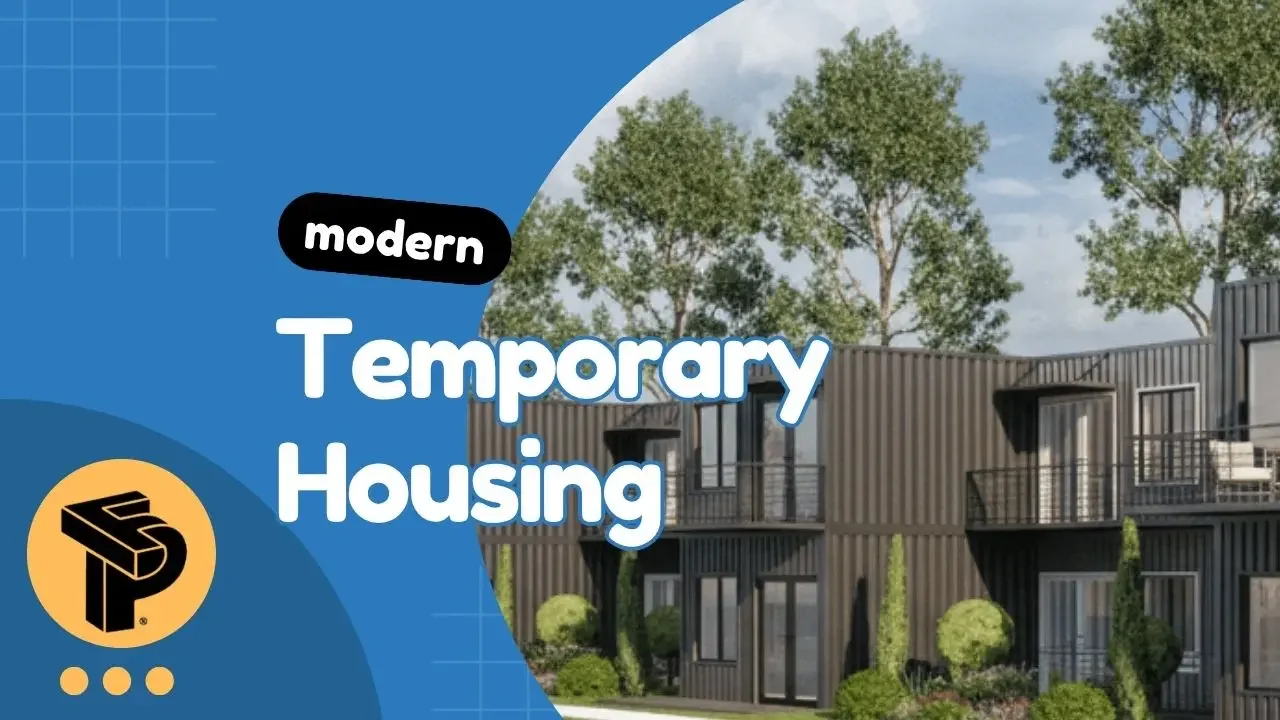
The phrase “temporary housing” often brings to mind basic accommodations designed for short-term use. In reality, modern temporary housing has evolved far beyond that perception.
Today’s solutions are expected to be comfortable, flexible, and capable of supporting a wide range of living situations. Whether accommodating a growing workforce, supporting a relocation period, or providing additional space during a property transition, temporary housing is increasingly being viewed as a practical lifestyle solution rather than simply a short-term necessity.
This shift is driving demand for housing options that can be installed quickly while still delivering the comfort and functionality people expect from permanent spaces.
Why Temporary Housing Is Becoming More Relevant
Housing needs are becoming less predictable.
People move more frequently, work patterns continue to change, and many projects require accommodation that can adapt to evolving circumstances.
As a result, temporary housing is now commonly used for:
workforce accommodation
project-based housing
seasonal living
transitional housing
remote-site accommodation
hospitality and tourism projects
Flexibility has become just as important as durability.
The Problem With Traditional Temporary Structures
Many conventional temporary structures were designed around speed rather than long-term usability.
Common challenges often include:
poor insulation
limited comfort
short lifespan
basic interior finishes
lack of adaptability
As expectations rise, users increasingly look for solutions that feel more like real living environments rather than temporary shelters.
What Modern Temporary Housing Looks Like
The newest generation of temporary housing prioritizes livability alongside mobility.
Instead of sacrificing comfort for convenience, many modern systems focus on:
efficient layouts
natural lighting
climate control
adaptable interiors
faster installation
This approach creates spaces that can remain comfortable for weeks, months, or even years, depending on the intended use.
Flexibility Is Becoming the Main Priority
One of the biggest changes in housing design is the move away from single-purpose structures.
A temporary accommodation unit may serve one role today and a completely different role in the future.
For example, a structure might begin as:
workforce accommodation
and later become:
guest accommodation
studio space
vacation rental
remote living unit
That level of flexibility helps maximize long-term value.
Modular Construction and Temporary Housing
Modular systems have become increasingly popular because they simplify many challenges associated with traditional construction.
Compared to conventional building methods, modular solutions often offer:
faster deployment
reduced site disruption
predictable construction timelines
easier relocation potential
This flexibility is one reason modular approaches continue appearing across a wide range of housing categories.
Some of the same principles discussed in foldable prefab homes are also helping reshape how temporary housing is designed and delivered.
A Practical Example of Flexible Accommodation
One modular solution that aligns naturally with modern temporary housing needs is the Z201 from Prefahb.co.
Its compact footprint and adaptable design make it suitable for situations where speed, flexibility, and efficient use of space matter.
Potential applications include:
workforce accommodation
transitional living
temporary guest housing
remote-site lodging
seasonal occupancy
Because the structure focuses on practical deployment and modular flexibility, it can adapt to changing requirements more easily than many traditional housing approaches.
Temporary Housing Beyond Construction Sites
Temporary housing is no longer limited to industrial or project-based environments.
Today, these solutions are increasingly being used for:
Relocation Periods
Families or individuals moving between properties often need comfortable short-term accommodation.
Tourism and Hospitality
Temporary modular units can support seasonal demand without requiring permanent expansion.
Remote Living
Some people choose modular accommodations for off-grid or semi-remote lifestyles.
Property Expansion
Additional living space can be added without immediately committing to a large-scale construction project.
Important Factors to Consider
Before selecting a temporary housing solution, it is important to evaluate:
duration of use
climate requirements
utility access
transportation logistics
local regulations
future adaptability
The most successful projects are usually those that consider not only immediate needs but also how the structure may be used later.
Why Adaptability Matters More Than Ever
Housing needs rarely remain static.
A structure that can evolve alongside changing circumstances often delivers greater long-term value than one designed for a single purpose.
That is one reason flexible modular environments continue gaining attention across residential, commercial, and hospitality sectors.
The ability to install, use, adapt, and potentially relocate a structure creates opportunities that traditional housing often cannot match.
Frequently Asked Questions
What qualifies as temporary housing?
Temporary housing refers to accommodation intended for short-term or transitional use, although many modern solutions can remain functional for much longer periods.
Can temporary housing be comfortable for long-term stays?
Yes. Modern modular systems often include insulation, utilities, and interior finishes designed for extended occupancy.
Is modular housing suitable for temporary accommodation?
Yes. Modular construction is widely used because of its flexibility and faster installation process.
Can temporary housing be repurposed later?
Many modern modular structures are designed specifically to support multiple future uses.
Final Thoughts
Temporary housing has evolved into something much more versatile than traditional short-term accommodation. Modern solutions prioritize comfort, flexibility, and adaptability while still maintaining the speed and efficiency that temporary structures require.
As living patterns continue to change, modular housing systems are helping redefine what temporary accommodation can be, offering practical spaces that remain useful long after their original purpose has ended.