
Stair Treads: What to Know About Materials, Dimensions, and Replacement
Stair treads are the part of a staircase that does the actual work, the horizontal surface you step on, hundreds of times a day, for as long as you live in the house. They take more wear than almost any other surface in a home, they're governed by specific safety codes, and they have an outsized effect on both how a staircase looks and how safe it is to use.
Whether you're building a new staircase, replacing worn treads, or specifying a staircase for a renovation or new home, this guide covers what actually matters: the materials and how they compare, the dimensions the code requires, and what to consider before a replacement project.
Stair Tread Anatomy and Terminology
A quick vocabulary primer, because stair terminology is used inconsistently:
Tread: The horizontal surface you step on. The primary subject of this guide.
Riser: The vertical surface between two treads. Some staircases have solid risers (closed); others have open space between treads (open riser stairs).
Nosing: The front edge of the tread, which typically projects slightly beyond the riser below. The nosing provides extra foot room and a defined edge. Code specifies nosing projection (typically 3/4 inch to 1-1/4 inch where required).
Stringer: The structural member (usually diagonal) that supports the treads and risers along the sides or center of the staircase.
Run: The horizontal depth of a single tread, measured from nosing to nosing.
Rise: The vertical height between the tops of two consecutive treads.
Stair Tread Dimensions: What the Code Requires
Stair dimensions are governed by building codes for safety reasons — inconsistent or improperly sized stairs are a leading cause of household falls. The US residential code (IRC) requirements:
Tread depth (run): Minimum 10 inches, measured horizontally from nosing to nosing. Many builders use 11 inches for greater comfort. Deeper treads are more comfortable to descend; shallower treads (at or near the 10-inch minimum) feel steeper and less secure.
Riser height (rise): Maximum 7-3/4 inches under IRC. Lower risers (6.5–7 inches) feel more comfortable and gradual; risers at the maximum feel steeper.
Consistency: This is critical for safety. The variation between the largest and smallest tread depth (or riser height) in a single flight cannot exceed 3/8 inch. Inconsistent stairs are a serious trip hazard because your body learns the rhythm of a staircase after the first few steps and expects it to continue — a single tread that's shorter or a riser that's taller than the rest causes stumbles.
Nosing: Where treads have solid risers, a nosing of 3/4 inch to 1-1/4 inch is required if the tread depth is less than 11 inches. Nosing provides additional foot room without increasing the staircase's total horizontal footprint.
Width: Minimum 36 inches clear stair width for residential staircases (measured above the handrail height).
Open risers: If a staircase has open risers (no vertical board between treads), the opening between treads must not allow a 4-inch sphere to pass through — a safety requirement to prevent small children from falling through or getting stuck.
Commercial staircases have different (generally more demanding) requirements under the IBC. Always confirm the applicable code for your specific project and jurisdiction.
Stair Tread Materials
Solid hardwood
The premium standard for interior stair treads. Solid hardwood treads are durable, refinishable (they can be sanded and re-stained multiple times over their life), and beautiful. The main species:
Oak (red or white): the most popular choice — hard, durable, affordable, widely available, and takes stain well. White oak has a slightly tighter grain and better moisture resistance; red oak has a warmer tone and more pronounced grain.
Maple: very hard and durable, with a subtle, uniform grain. Takes a clean modern finish well but can be harder to stain evenly than oak.
Hickory: one of the hardest domestic hardwoods, with dramatic grain variation. Excellent for high-traffic applications; the strong grain pattern is a distinctive aesthetic choice.
Walnut: a premium hardwood with rich, dark color and elegant grain. Softer than oak or maple, so better suited to moderate-traffic applications where its beauty justifies the cost.
Solid hardwood tread cost: $30–$100+ each depending on species and dimensions.
Engineered wood
Engineered treads have a hardwood veneer over a stable core (plywood or composite). They're more dimensionally stable than solid wood (less prone to warping and cupping with humidity changes) and less expensive. The limitation is that the thin veneer can typically only be refinished once or not at all. Good for cost-conscious projects and stable indoor environments.
Bamboo
Technically a grass, bamboo is harder than many hardwoods and has strong sustainability credentials (fast-growing, renewable). Bamboo stair treads offer good durability at moderate cost with a distinctive light appearance. Strand-woven bamboo is the hardest and most durable form.
Softwood (pine, fir)
Softwood treads cost less but dent, scratch, and wear significantly faster than hardwood. Appropriate for low-traffic staircases, rustic aesthetics where wear adds character, or budget-constrained projects. Not recommended for main staircases in busy households.
Steel and metal
Steel treads — either solid plate, perforated, or grated — are used in industrial, contemporary, and exterior applications. Perforated or grated steel treads are the standard for exterior stairs because they drain water and don't accumulate ice. In contemporary interiors, steel treads (sometimes paired with wood or in combination with floating stair designs) create a strong industrial aesthetic. Powder-coated finishes provide corrosion resistance and color options.
Concrete
Precast or poured concrete treads are extremely durable and suit modern, industrial, and exterior applications. Heavy and permanent; typically used in new construction rather than renovation. Can be finished smooth, polished, or with exposed aggregate for texture and slip resistance.
Floating Stair Treads: The Contemporary Statement
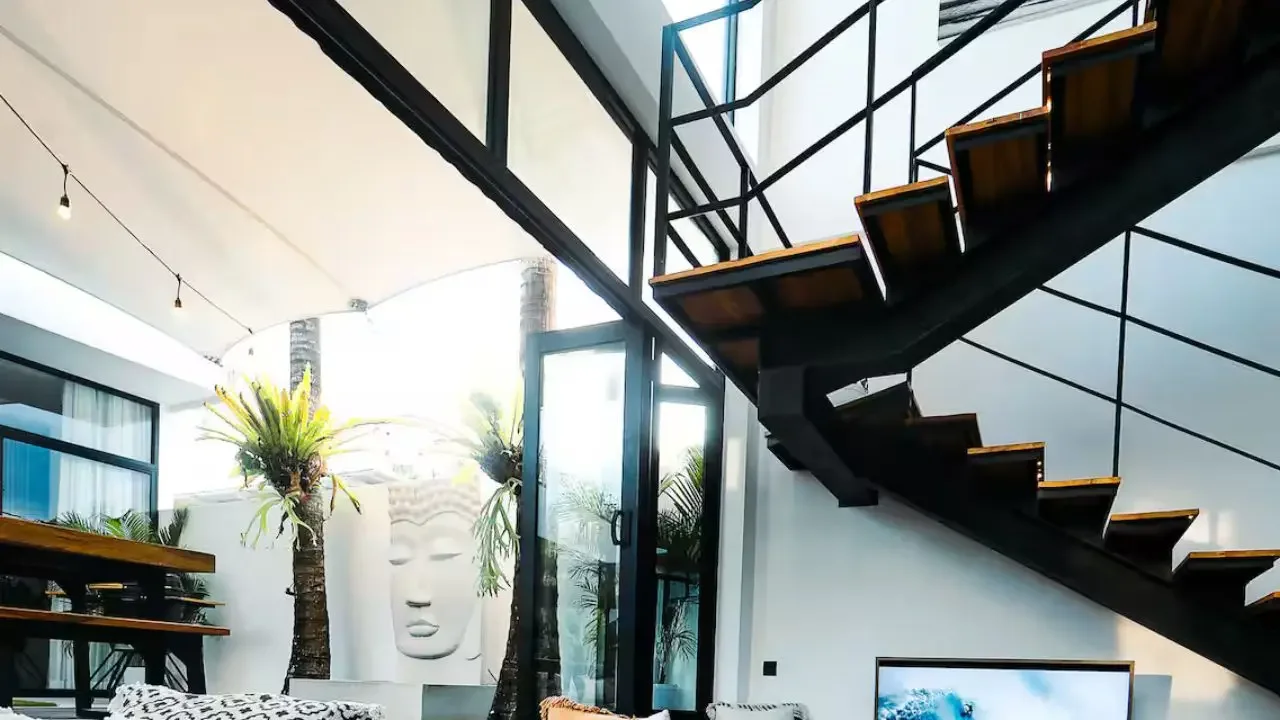
Floating stairs — treads that appear to project from a wall or central stringer without visible support underneath — have become one of the most sought-after contemporary staircase features. The visual effect is striking: an open, minimalist staircase that preserves sightlines and makes a space feel larger.
Floating treads require more engineering than conventional treads. Each tread must cantilever from its support (a wall-mounted steel frame, a mono-stringer, or embedded steel plates) and carry full loads — including the dynamic loads of people moving — without the distributed support a conventional stringer system provides. This typically means:
Thick solid wood treads (2–3 inches) or steel-reinforced treads
Concealed steel mounting brackets or a steel sub-structure
Structural engineering to verify the cantilever can handle code-required loads
Careful wall construction (if wall-mounted) to transfer loads into the building structure
Floating stairs also require attention to code compliance — open risers must meet the 4-inch sphere rule, and the open sides require a compliant guard and handrail system. The aesthetic is worth the added complexity for many buyers, but it's not a simple swap for conventional treads.
For container homes and modern prefab architecture, floating stair designs pair naturally with the contemporary aesthetic — clean, minimal, and honest about the steel structure that makes them possible.
Replacing Stair Treads: What to Know
Tread replacement is a common renovation — worn, dated, or damaged treads are often the single change that most improves a staircase's appearance.
Full replacement vs. retro-fit systems
Full replacement removes the existing treads entirely and installs new ones. This is the most thorough approach and necessary if the existing treads are structurally compromised, but it's labor-intensive and requires the staircase to be out of service during the work.
Retro-fit tread systems (also called stair renovation systems or overlay treads) install new treads over the existing structure. These are engineered to fit over existing treads — often as part of a system that also includes riser covers — creating a new finished surface without removing the underlying structure. Retro-fit systems reduce labor, cost, and disruption, making them popular for renovations, particularly converting carpeted stairs to hardwood.
Cost expectations
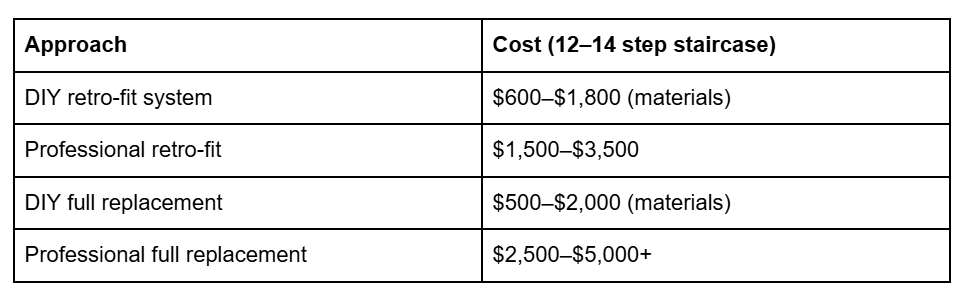
Key replacement considerations:
Maintain code-compliant dimensions — replacement treads must preserve consistent rise and run.
Address the nosing — retro-fit systems include a nosing profile; ensure it meets code projection requirements.
Consider the risers — replacing treads while leaving old risers often looks unfinished; most tread replacements include riser covers for a coherent result.
Slip resistance — for households with elderly members or young children, consider non-slip treatments, textured finishes, or applied non-slip strips, particularly on hardwood which can be slippery.
Choosing the Right Stair Treads
The decision comes down to matching material to use and aesthetic:
Main staircase, busy household: Solid oak, maple, or hickory. Hard, durable, refinishable, and proven in high-traffic use.
Contemporary or minimalist interior: Consider floating treads in thick solid wood or steel; or clean-profile solid hardwood with open risers.
Renovation on a budget: Retro-fit overlay system in engineered or veneer hardwood over the existing structure.
Exterior stairs: Perforated or grated steel, concrete, or pressure-treated/naturally rot-resistant wood (cedar, ipe). Prioritize drainage and slip resistance.
Container home or modern prefab: Steel treads or thick solid wood floating treads align with the contemporary, structurally-honest aesthetic.
Explore Prefahb's container home models with integrated staircase and interior finish solutions.