
Shipping Container Cabin: Why the Industrial Box Makes a Perfect Retreat
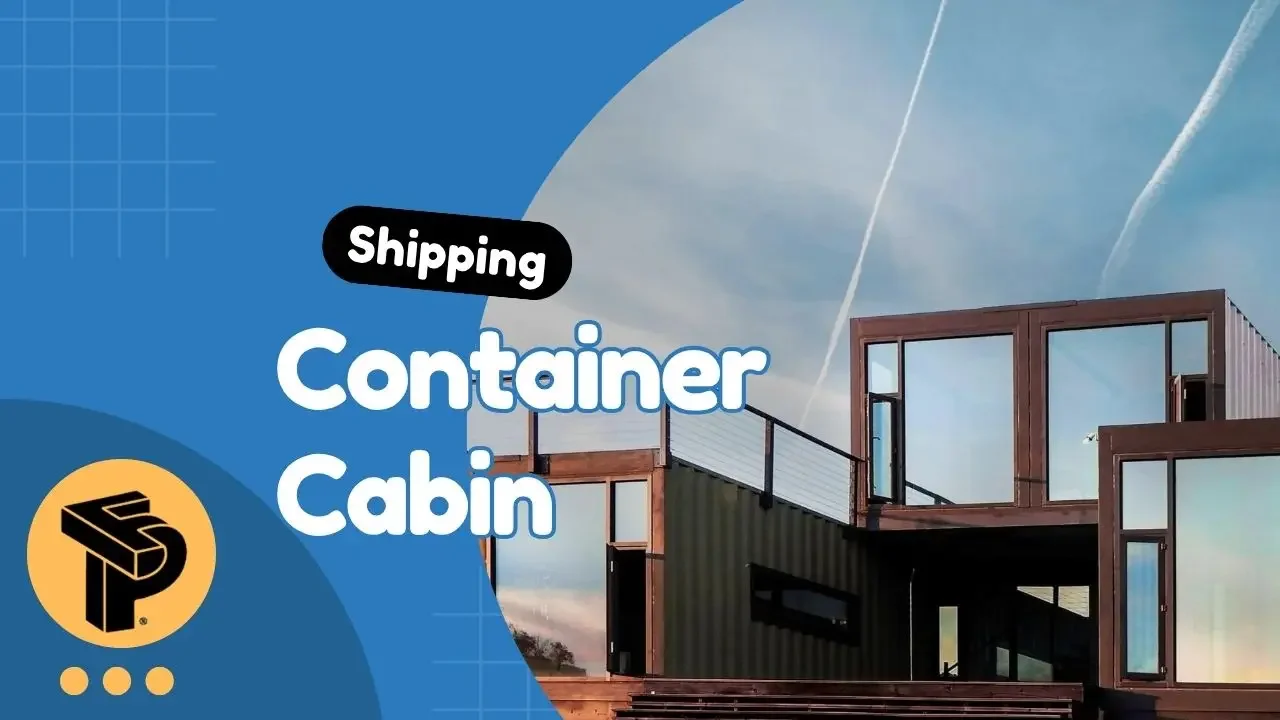
There's a particular irony in container cabin design that the best examples lean into rather than apologize for. A shipping container is an object built for function over feeling — designed to withstand ocean storms, stacked ten high, dragged across docks. And yet, placed in a forest clearing or on the edge of a mountain meadow and given a wood deck, some serious glazing, and decent insulation, it becomes one of the more compelling things to wake up in.
The reasons aren't mysterious. The cabin typology has always been about stripping away the excess, getting to a small, well-built space with a strong connection to landscape. A container delivers exactly that, structurally and aesthetically.
Here's what makes a great container cabin, what different approaches look like, and what it realistically costs to build one.
What a Container Cabin Is (And Isn't)
A shipping container cabin is a residential or recreational structure built on a shipping container chassis, finished to livable standard, and typically sited in a rural, remote, or recreational context — woods, mountains, lakeside, desert, coastal bluff.
It's not a storage container with a cot thrown in. A properly built container cabin has insulation, electrical, plumbing (or a composting toilet alternative for off-grid setups), climate control, and finishes that make it genuinely comfortable for extended stays. The industrial starting material disappears under the finish work, or is deliberately retained as part of the aesthetic.
What distinguishes a container cabin from a container home, conceptually, is mostly context and program. The same structure that serves as a vacation retreat on 40 acres in Wyoming serves as a primary residence in a suburban backyard in another configuration. The form doesn't change much; the context does.
Design Approaches: How Container Cabins Actually Look
Container cabin design has moved well beyond the single-box-with-a-door aesthetic of early DIY builds. Here are the approaches that produce the most successful results.
The long view cabin. A single 40-foot container oriented to capture a specific view — mountain range, lake, valley — with large-format glazing on the view face and a generous deck extending that orientation outward. This is the most classic container cabin configuration and the easiest to execute well. The container's linear form focuses the space toward the view the way a rifle sight focuses on a target.
The key detail: the deck needs to be substantial. A 4-foot-wide deck is barely usable for anything other than stepping. A 10-to-12-foot-wide deck with proper furniture and perhaps a roofed portion becomes the primary living space in good weather — and in a cabin context, good weather is often why you're there.
The forest cabin. Nestled into tree cover, oriented for dappled light rather than panoramic views, often elevated on helical piles or piers to minimize site disturbance and allow the landscape to continue under and around the structure. Exterior materials lean toward dark paint or weathering steel to reduce visual impact; wood cladding is the other common choice, softening the industrial profile.
This configuration particularly suits the single 20-foot container — compact enough to slip between trees, small enough to leave the landscape dominant.
The cottage configuration. Two containers in an L-shape or connected end-to-end, with the joint between them creating a covered outdoor room or kitchen/living-expanded interior. This moves the container cabin from retreat to cottage — enough space for two or three guests, a real kitchen, a proper bathroom. The L-configuration creates an interior courtyard dynamic even at modest scale.
The off-grid retreat. Designed specifically for independence from utility infrastructure: rooftop solar with battery storage, composting toilet, rainwater collection and filtration, passive solar orientation for winter heat gain. The container's tight steel shell, properly insulated, minimizes the energy load that the off-grid system needs to cover. A wood-burning stove handles heating on cold nights with fuel that's available on most rural properties.
Prefahb's Nomadic Package on the Model B201 (from $29,000) addresses exactly this configuration — solar, wood-burning stove, and RV-style connection for flexible utility hookup when grid access is available. For buyers who want an off-grid retreat ready to drop on remote land, it's a complete system rather than a collection of afterthought upgrades.
Interior Design: Getting the Small Space Right
Cabin interiors succeed or fail based on how well they handle compression. A container is a small space. Every interior decision either makes it feel appropriately intimate or uncomfortably cramped.
Light is everything. A single 40-foot container with one or two small windows feels like a tunnel. The same container with a full-height sliding glass door on the long south face and a clerestory window running the upper portion of the north wall feels like a room. Natural light does more for perceived space than any other design decision.
Built-ins over freestanding. In a cabin that's 7'8" wide, a freestanding dresser, nightstand, and bookshelf consume floor space that simply isn't there. Built-in storage — shelving integrated into the wall framing, under-bed storage, fold-down surfaces — keeps the floor clear and the space livable.
Material warmth against the steel. Raw steel interiors read cold — literally and visually. The most successful container cabin interiors pair the industrial shell with warm materials: pine or cedar tongue-and-groove on the ceiling, concrete or hardwood on the floor, natural textiles for upholstery. The contrast between the structural steel (visible at corners, door frames, and where the shell is deliberately exposed) and the warm finish materials creates an aesthetic tension that's specifically compelling in the cabin context.
The murphy bed. In a single-room cabin configuration, a well-designed murphy bed is not a compromise — it's the feature that makes the space work for waking hours as well as sleeping hours. Closed, it creates a usable living space. Open, it provides a proper sleeping surface. Prefahb builds the murphy bed option directly into the Model B201 for exactly this reason.
Container Cabin Costs: The Honest Range
Costs break into two categories, as always: what the structure itself costs, and what the whole project costs.
Structure cost:
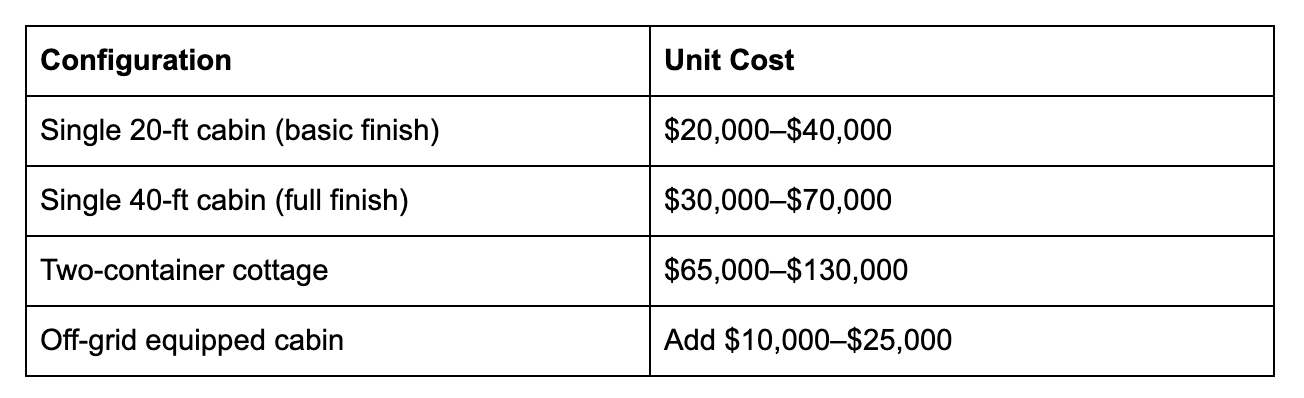
All-in project cost (US site):
Add foundation ($5,000–$20,000), site access preparation ($3,000–$15,000), utility connections or off-grid systems ($5,000–$30,000), delivery and installation ($5,000–$15,000), and permit fees ($2,000–$10,000).
A realistic all-in budget for a complete, livable single-container cabin on a rural US property: $60,000–$130,000 depending on finish level, site conditions, and location.
For comparison: a comparable traditionally-built cabin in most US markets runs $100,000–$200,000 and takes considerably longer to construct — particularly on remote sites where bringing conventional contractors and materials is itself a logistics challenge.
Siting and Permitting for Rural Cabin Properties
The regulatory environment for container cabins on rural land is more permissive than urban or suburban contexts, but it's not absent.
Zoning: Agricultural and rural residential zones typically allow residential structures with minimal restrictions. Confirm the parcel's zoning allows the intended use (full-time residence, vacation rental, or accessory use).
Septic/composting: Most rural properties are off municipal sewer. A conventional septic system adds $8,000–$25,000 to project cost. A properly sized composting toilet system ($2,000–$5,000 for the unit) is permitted in most jurisdictions for seasonal or intermittent use structures.
Building permits: Even remote rural properties require building permits in most US counties. Some counties have simplified requirements for small structures (under 400–600 sqft in some jurisdictions). Confirm before starting.
Fire codes: Rural properties in fire-prone areas may have defensible space requirements and ember-resistant construction specifications. A steel-sided container cabin naturally satisfies many of these requirements.
Why Container Cabins Work
The container cabin has become a genuine category — not just a novelty or a cost-cutting measure — because the format genuinely suits the use case. Small, well-built, structurally robust, easy to insulate and seal, fast to deploy, distinctive to look at. In a rural setting where the building is meant to be subordinate to the landscape rather than compete with it, the compact container form is an asset.
The buyers who end up most satisfied are the ones who embrace what the format does well rather than trying to make it approximate a conventional cabin. Use the linear form to frame a view. Let the deck do the heavy lifting for living space. Insulate seriously. Keep the interior simple and use material warmth to counterbalance the industrial shell.
Do those things and a shipping container cabin is one of the better retreat buildings you can put on a piece of land.
Browse Prefahb's cabin-suitable models with off-grid and compact configurations.