
ADU Designs: A Practical Guide to Types, Layouts, and Choosing What Works for Your Property
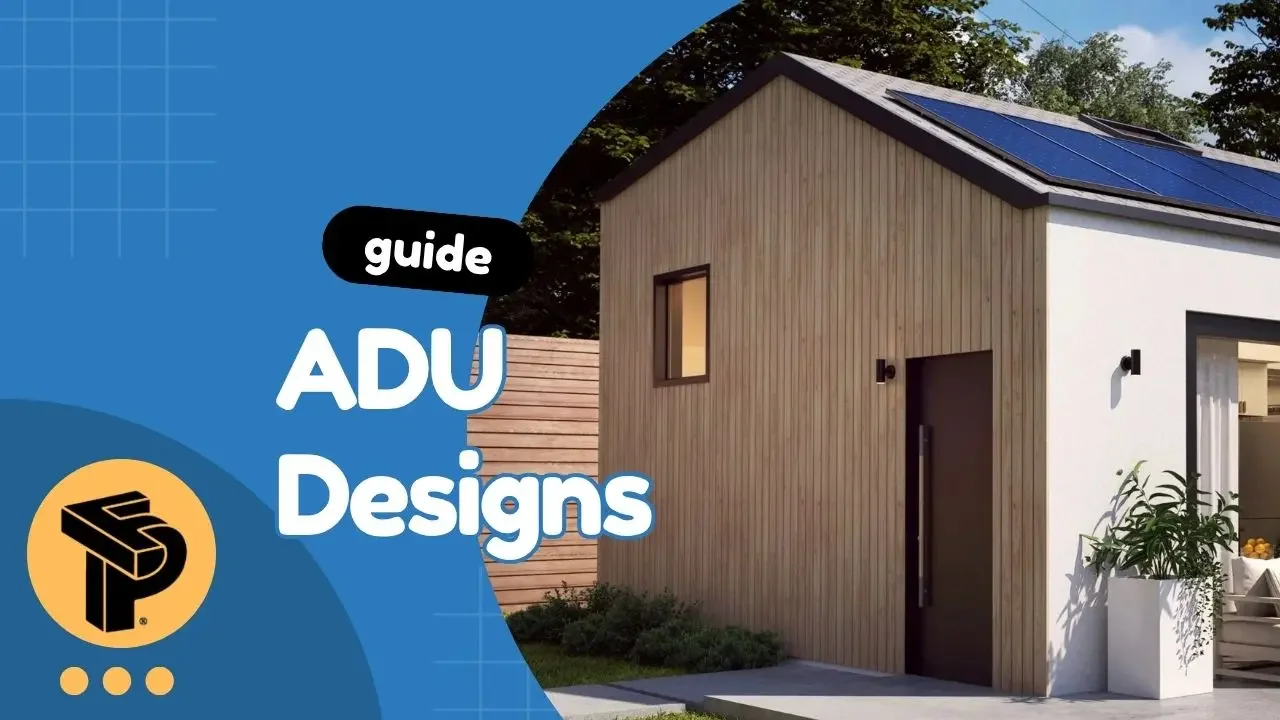
Most ADU design conversations start in the wrong place, with what looks good online rather than with what actually fits the property, the intended use, and the local regulatory environment. The design that photographs beautifully on Pinterest may be unbuildable on your specific lot, or illegal in your zoning district, or poorly suited to the use you actually have in mind.
This guide starts from the other direction: from use case and site constraints toward design, rather than from design backward to fit.
The Five ADU Types — and When Each Makes Sense
Before getting into floor plans and aesthetics, understand the five main structural types of ADU and what distinguishes them. The right type for your project is determined by your lot, your budget, and what your local zoning allows, not by what looks nicest.
1. Detached ADU (DADU)
A fully separate structure on the same parcel as the primary home. Built in the backyard, side yard, or front yard (less common), with no shared walls with the main house. This is the most versatile ADU type — completely independent, with its own entry, its own mechanical systems, and the most privacy for both the ADU occupant and the main house resident.
Best for: rental income (maximum privacy = premium rental rate), multigenerational family living where independence is valued, remote work setups, guest quarters.
Limitation: requires adequate lot size to meet setback requirements. Most jurisdictions require the ADU to sit a minimum of 4–5 feet from side and rear property lines.
2. Attached ADU
A living unit added to the main house, sharing one or more walls. This could be a side addition, a rear extension, or a converted attached portion of the existing structure. Construction is typically cheaper than a detached unit because it shares at least one structural wall and potentially mechanical systems.
Best for: lots that don't have enough backyard space for a detached structure, buyers who want to manage construction cost, multigenerational setups where some connection between units is acceptable.
Limitation: less privacy than a detached unit; sound transmission through shared walls is a design consideration that requires deliberate acoustic treatment.
3. Garage Conversion ADU
Converting an existing attached or detached garage into living space. Generally the least expensive ADU path because the structure already exists, costs are primarily for interior finishing, insulation, electrical, plumbing, and addressing any structural issues.
Best for: properties where an existing garage is underused, cost-constrained buyers who want to maximize value from existing square footage.
Limitation: trades parking for living space (which may violate HOA requirements or reduce property usability), and existing garage structures often require significant work to meet residential energy code, insulation, and egress requirements.
4. Junior ADU (JADU)
An ADU carved out of the interior of the main home itself — a converted bedroom with an added kitchenette and separate entry. In California, JADUs are limited to 500 square feet and must be within the existing footprint of the primary dwelling. They typically share some systems (laundry, potentially mechanical) with the main house.
Best for: homeowners who want to add a rental unit with minimal construction, properties where lot constraints make external ADU additions difficult.
Limitation: limited size, less privacy, and typically requires the homeowner to occupy one of the units on the property (in California, this owner-occupancy requirement was temporarily suspended but may apply depending on when you're reading this).
5. Above-Garage ADU
Living space built above an existing or new garage. A two-story structure with parking below and habitable space above. More complex and expensive than a simple garage conversion, but produces a completely separate unit with good privacy and minimal footprint impact on the yard.
Best for: properties where backyard space is limited or highly valued, buyers who want to maintain parking while adding a unit, lots in denser urban areas where vertical development is more appropriate than horizontal.
ADU Floor Plans: What Different Sizes Look Like
The floor plan is where the design becomes real. Here's what different ADU sizes can actually accommodate.
Studio ADU (200–400 sqft)
The most efficient and least expensive ADU configuration. In 200–400 sqft, you're fitting: a sleeping area (murphy bed or loft to save floor space), a small kitchen (galley style, 8–10 linear feet), a bathroom (shower, toilet, vanity — 45–55 sqft), and some living area. It's tight but entirely livable for one person.
The critical design move in a studio ADU is eliminating interior doors wherever possible. Every door requires swing clearance that a small space can't afford. A bathroom door is unavoidable; bedroom separation from the living area can often be handled with a curtain track or a partial wall rather than a door.
Container-based studio ADUs like Prefahb's Model B201 (from $29,000) are purpose-designed for this configuration — the murphy bed, fold-down desk, and wood deck work together to make the small floor area function well for daily living.
1-Bedroom ADU (400–600 sqft)
The sweet spot for rental income. At 400–600 sqft, a one-bedroom ADU can accommodate: a genuine bedroom with a closet (80–120 sqft), a full kitchen (not just a kitchenette), a full bathroom with tub or larger shower, and a living area with room for a sofa and modest dining table.
This is the size range that most tenants looking for a long-term rental consider a complete home rather than a temporary arrangement — and that's what commands the best rents relative to construction cost.
2-Bedroom ADU (600–900 sqft)
For multigenerational living or short-term rental to families. Two bedrooms, two bathrooms (ideally), a proper kitchen, and living and dining space. At 900 sqft, this approaches a small home rather than an accessory unit in functional terms.
The two-bedroom configuration is the most expensive ADU to build relative to ROI for rental income purposes — the construction cost increase isn't fully reflected in higher rents in most markets. It makes most sense when the primary use is family accommodation rather than income generation.
2-Story ADU (800–1,200 sqft)
Two levels approximately double the floor area on the same footprint — useful on constrained lots where setbacks limit horizontal expansion. Sleeping areas typically on the upper level, living/kitchen/bathroom on the main level. Requires a stair, which consumes 50–80 sqft across both floors.
Height limits in your jurisdiction will determine whether this is feasible on your specific lot.
Modern ADU Design: What's Working in 2026
The aesthetic conversation about ADU design has matured significantly. A few design approaches that are producing the best results in the current market:
Indoor-outdoor connection. The most successful detached ADU designs treat the outdoor area adjacent to the unit as part of the living space, a covered deck or patio that extends the indoor square footage into the yard. In mild climates, this outdoor space gets used as the primary living area most of the year. Budget for the deck as part of the design, not an afterthought.
High ceilings. In small spaces, ceiling height does more for the sense of spaciousness than floor area. A 10-foot ceiling in a 400-sqft studio feels significantly less compressed than the same studio with 8-foot ceilings. For shipping container ADUs, specifying high-cube containers (9'6" exterior height) is a no-cost upgrade that pays dividends in perceived space.
Efficient storage design. Small ADUs live or die on storage. Built-in shelving, under-bed storage (which means designing the bed platform correctly), and a coat closet near the entry are all details that make a small unit genuinely livable rather than just technically complete.
Natural light prioritization. Window placement in ADU design is more consequential than in full-size homes because there are fewer opportunities. South-facing glazing for light and solar heat, a clerestory or skylight for interior rooms without exterior wall exposure, and glass near the front door to allow natural light into the entry are design moves that transform a small space.
Exterior material considered separately from main house. ADUs don't need to match the primary home exactly — and in many cases, a design that complements rather than copies the main structure is more visually interesting. The most successful ADU designs have their own clear aesthetic identity that works with the property rather than trying to disappear.
Choosing Between a Custom-Designed and Prefab ADU Design
For many buyers, the decision comes down to a custom design from a local architect versus a prefab unit from a manufacturer.
Custom design wins when: your lot has unusual constraints that require site-specific solutions, you want an ADU that's architecturally integrated with the main house, or your program is specific enough that standard plans don't fit.
Prefab wins when: speed matters, cost predictability matters, you want a known spec rather than an uncertain construction outcome, and the program fits within available standard configurations. For most buyers building a detached studio or one-bedroom ADU, a well-chosen prefab unit delivers better value than custom construction — faster, more consistent quality, and predictable cost.
Container-based prefab ADUs like Prefahb's models are particularly well-suited to detached ADU applications: they arrive structurally complete, install in days rather than months, and have the structural robustness of steel construction without the structural steel cost of a conventionally-built equivalent.
Before Finalizing Your ADU Design
Three things to confirm before locking in any ADU design.
Setback compliance. Measure your actual buildable area, the space within required setbacks from all property lines, and confirm your chosen design fits within it. Don't rely on rough estimates; measure.
Utility capacity. Confirm your existing electrical service panel has capacity for the ADU's load. If not, a panel upgrade ($2,000–$8,000) needs to be budgeted. Same check for water pressure and sewer capacity.
HOA review. If your property is in an HOA, submit your design for review before ordering anything. Most HOAs allow ADUs under California law and similar statutes elsewhere, but design compatibility requirements may affect exterior materials and colors.
Explore Prefahb's ADU-suitable models — from studio to two-bedroom configurations.