
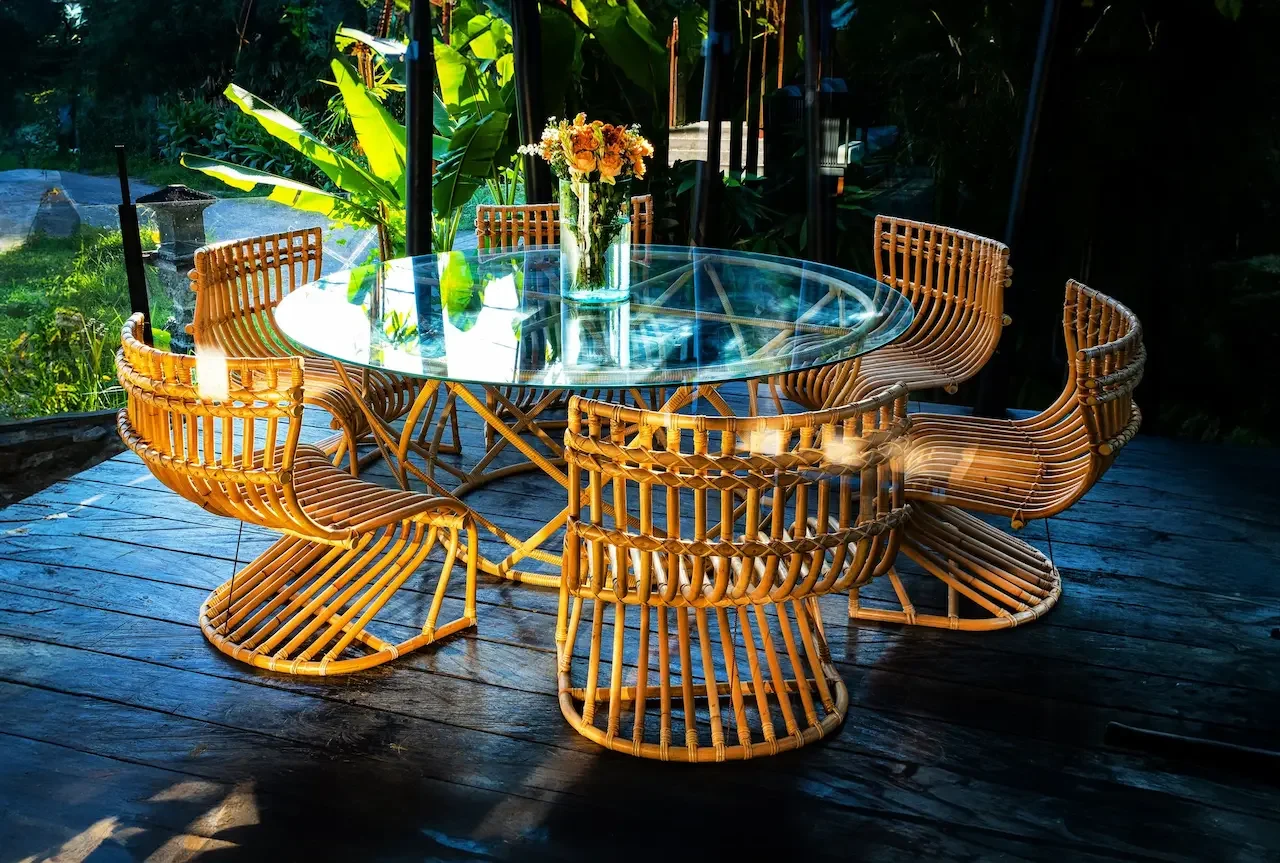
Rattan furniture is having a sustained moment, not a trend spike, but a genuine ongoing reassessment of natural materials in interior design. The appeal is legitimate: rattan is lightweight, structurally sound, visually warm, and produced from a renewable resource that grows faster than any timber species used in furniture making.
But the rattan furniture market is also one where quality differences are enormous and not immediately obvious from photographs. A well-crafted rattan dining chair from a skilled Balinese weaver and a cheaply made mass-produced substitute can look nearly identical in a product image. They don't feel or last the same way.
Here's what distinguishes quality rattan furniture, how to evaluate pieces before you buy, and what to look for across the main furniture categories.
What Rattan Actually Is
Rattan is not bamboo, though the two are frequently confused. Bamboo is a grass with hollow, segmented stems. Rattan is a climbing palm, one of approximately 600 species in the Calameae family, with solid stems that are dense, flexible, and extraordinarily strong relative to their weight.
The solid core is what makes rattan so useful for furniture. Rattan cane can be bent and shaped with steam without breaking, woven tightly without splitting, and carved without crumbling. Mature rattan stems harvested at three to seven years of growth, when the fiber density peaks, produce material that outperforms many hardwoods in flexibility and tensile strength.
Rattan's sustainability credentials are genuine. It grows in tropical forests, typically as an understory plant that benefits from the forest canopy. Unlike timber harvesting, rattan harvesting doesn't require felling trees; mature canes are cut, and the plant continues to grow. In Indonesia, Malaysia, and the Philippines (the world's main rattan-producing regions), rattan cultivation provides income for rural communities while maintaining forest cover.
The wicker distinction: Wicker refers to a weaving technique, not a material. Wicker furniture can be made from rattan, bamboo, willow, seagrass, water hyacinth, or synthetic resin. "Rattan furniture" specifically means furniture using the rattan plant. "Wicker furniture" is a broader category. When someone calls furniture "wicker rattan," they typically mean rattan furniture woven using wicker technique — which is most quality rattan furniture.
Real Rattan vs. Synthetic: Know What You're Buying
The most important distinction in the rattan furniture market is between natural rattan and synthetic rattan (also called resin wicker or all-weather wicker).
Natural rattan is the actual plant material — warm, slightly irregular in texture, with the natural variation that comes from a biological material. It has a matte surface finish, feels tactilely rich, and develops a gentle patina over time. Natural rattan performs best indoors or in covered outdoor spaces where it's protected from sustained moisture and direct UV exposure.
Synthetic rattan (resin wicker) is petroleum-derived polyethylene woven to resemble rattan. It's uniform in texture, slightly glossy, identical piece-to-piece, and highly resistant to weather — which makes it genuinely better for full outdoor exposure. It doesn't develop patina; it looks the same in year one as year ten. The visual imitation is often convincing in photographs but less so in person, where the uniformity and slight plasticity of the material become apparent.
Neither is inherently superior — they serve different use cases. For indoor dining rooms, living rooms, and covered porches, natural rattan is warmer, more characterful, and more satisfying to live with. For exposed outdoor settings where rain, sun, and humidity are constant factors, quality synthetic rattan is the more practical choice.
The problem in the market is that many sellers don't make this distinction clearly, or describe synthetic products as "natural" to trade on the cachet of the real material. Simple test: natural rattan is never perfectly uniform. If every strand of weave is identically round, identically smooth, and identically colored, it's synthetic.
Rattan Dining Sets: What to Look For
The rattan dining set — table plus four to six chairs — is the most popular rattan furniture purchase for most buyers. Here's what separates quality from compromise.
Frame construction. The structural frame of both table and chairs should use solid rattan poles, not hollow tubes. Hollow-tube frames are lighter to ship and cheaper to produce, but fail at stress points (chair legs, table base connections) significantly faster. At structural joints — where chair legs meet the seat frame, where table legs meet the top support — look for wrapped rattan bindings that reinforce the connection. These bindings are a hallmark of hand-crafted rattan furniture and indicate that joinery was done by a skilled weaver rather than an assembly line.
Weave tightness. Run your hand across the woven surfaces of seats and backrests. A tight, uniform weave without gaps, loose ends, or sections where the weave pattern is interrupted indicates quality workmanship. Loose weaves snag easily and wear faster. In quality rattan chairs, the weave pattern should be consistent across the entire surface with no visible starting or ending points.
Chair weight. Quality natural rattan chairs for dining use typically weigh 5–8 lbs each. Very light chairs (under 4 lbs) usually indicate thin, immature rattan or hollow-tube construction. Very heavy chairs may use dense materials but are less comfortable for everyday use.
Table construction. Rattan dining tables typically have glass, reclaimed wood, or woven rattan tops on a rattan frame base. Glass tops are practical (easy to clean, stable surface for dining) but require careful handling; woven rattan or wood tops have more warmth but require more maintenance. The table frame should be stable without wobbling at any leg — test before purchasing if buying in person.
Finish quality. Quality rattan furniture uses a sanded and sealed finish that protects the natural fiber while allowing its texture to show. Avoid pieces with heavy lacquer that creates a plasticky surface, or with no finish at all that leaves the raw fiber exposed to moisture.
Rattan Sofas and Living Room Sets
Rattan sofas and seating sets have moved well beyond the sunroom-and-conservatory associations of earlier decades. Contemporary rattan sofas in living rooms feel deliberately chosen rather than inherited — they bring warmth and texture that upholstered sofas in synthetic fabrics rarely achieve.
The frame evaluation criteria are the same as for dining furniture — solid poles, tight binding at joints, consistent weave. For sofas and lounge chairs, the cushion specification matters as much as the frame:
Cushion foam density. Higher-density foam (28–32kg/m³ and above) holds its shape and provides proper support; low-density foam (under 20kg/m³) compresses and loses shape quickly. Ask the manufacturer for foam density specifications if buying from a quality-focused supplier.
Fabric durability. Rattan sofa cushions are subject to more wear than dining chair cushions because people spend more time on them. Look for durable upholstery fabrics — canvas, heavy linen, or high-grade polyester blends with at least 50,000 double-rub ratings. Removable, washable covers are strongly preferable.
Frame stability for seating. A dining chair is sat in and stood up from; a sofa frame endures people sitting, shifting, and leaning. The rattan frame needs to be proportionally heavier for sofa use than for dining chairs. Softwood-reinforced rattan frames — using internal timber or bamboo supports at key structural points — provide better long-term stability for sofa-scale furniture.
Balinese Rattan: Why Origin Matters
Indonesia — and Bali specifically is the center of the world's highest-quality rattan furniture production. This is a function of geography, material, and craft tradition.
Indonesia produces over 80% of the world's rattan supply and has the mature plantation and wild-harvest infrastructure to supply high-grade material. The proximity of raw material to production keeps quality high and costs lower than furniture produced from exported rattan elsewhere.
Balinese craft tradition adds a further dimension. The furniture-making communities in and around Bali have developed techniques over generations — joinery approaches, weave patterns, finishing methods — that are genuinely distinct from mass-production approaches. Hand-wrapped joints, complex weave patterns, and the attention to material selection that comes from skilled craftspeople who take pride in individual pieces are visible in the quality of finished furniture in ways that are difficult to replicate with industrial production methods.
Prefahb's manufacturing base in Ubud, Bali gives access to this craft tradition directly. The same attention to material and joinery quality that characterizes Prefahb's container home production applies to the furniture pieces that come out of the same regional craft ecosystem — whether or not the two product lines are explicitly connected in the buyer's mind.
See our products: The “Meja Rattan Table” and The "Ububoo Table Set"
Caring for Natural Rattan Furniture
Proper care extends rattan furniture life significantly.
Moisture management. Natural rattan tolerates occasional humidity but not prolonged moisture exposure. Wipe spills immediately; don't leave rattan furniture in spaces with consistently high humidity (like unventilated bathrooms or damp basements). In humid climates, occasional treatment with tung oil or linseed oil prevents the fiber from drying and cracking.
Sunlight. Direct UV exposure bleaches and weakens rattan over time. Position rattan furniture away from direct, sustained sun exposure in south-facing windows or covered porches. UV-filtering window film reduces the risk if repositioning isn't practical.
Cleaning. Vacuum with a brush attachment to remove dust from woven surfaces. Spot clean with a damp cloth and mild soap; allow to dry thoroughly before use. Avoid soaking.
Occasional tightening. Hand-woven rattan can loosen slightly over years of use. Re-wrapping loose bindings with new rattan or cane is a straightforward repair that most local furniture repair shops can perform.
Well-maintained natural rattan furniture from quality manufacturers lasts 15–25 years and often improves aesthetically as it develops the warm patina that only natural materials acquire.
Discover Prefahb's Bali-crafted furniture and home collections.