
Prefab Homes in California: What You Need to Know Before You Buy
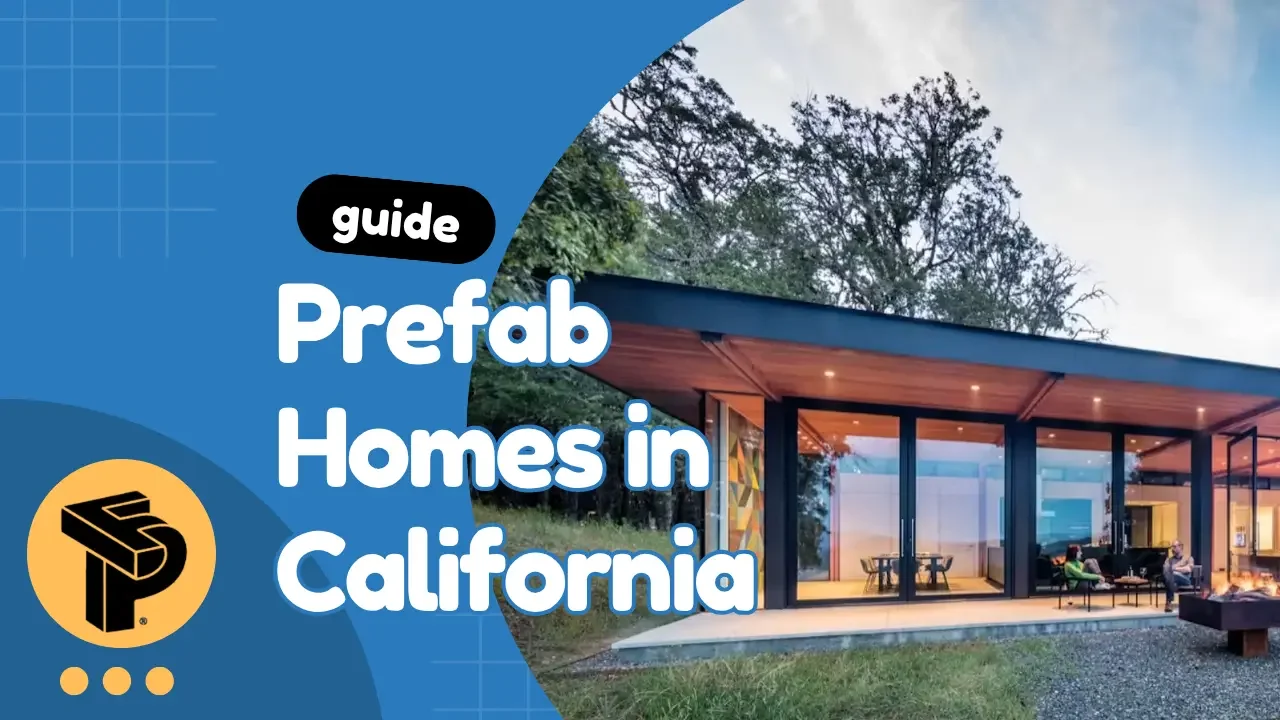
California is simultaneously one of the best and most complicated places in the country to build a prefab home. The demand is obvious: housing costs in LA, the Bay Area, and San Diego are among the highest in the nation, and prefab offers a genuine path to homeownership (or rental income) at a fraction of traditional construction costs. The complications are equally real: strict building codes, seismic requirements, HOA restrictions, and a permitting landscape that varies dramatically from one county to the next.
This is what you actually need to know before buying a prefab home in California.
Why Prefab Makes Sense in California
The California housing crisis isn't getting resolved by traditional construction. Build costs are high, labor is expensive, and the timeline from permit to move-in on a site-built home can stretch two to three years. Prefab addresses all three problems directly.
Cost. A factory-built home eliminates a significant portion of on-site labor costs. When the structure arrives largely complete, you're paying for installation and connections — not months of daily crew wages.
Speed. Most prefab homes can be manufactured in eight to sixteen weeks. Site installation, once the foundation is ready, is measured in days rather than months.
Quality consistency. California's building codes are strict for good reason—seismic activity, fire risk, and environmental standards all drive requirements that on-site construction sometimes fails to meet consistently. Factory production, with its quality control checks and precise tolerances, often produces more consistent results.
ADU opportunity. California's ADU (Accessory Dwelling Unit) laws have been progressively liberalized since 2017. SB 9 and related legislation now allow property owners in most of the state to add a prefab ADU to their lot with streamlined permitting. This has opened up a significant market for container-based prefab units as rental income generators.
Prefab Homes in Los Angeles: Specific Considerations
LA deserves its own section because the market there is both the most active and the most complex.
Zoning. LA's zoning code divides the city into dozens of zone types, each with different setback requirements, height limits, and allowable uses. Before purchasing any prefab unit for an LA property, confirm the zone classification and what it allows. The city's ZIMAS tool lets you look this up by address.
Seismic compliance. All structures in LA must meet the California Building Code's seismic provisions. Container-based homes actually have structural advantages here — the steel shell of a shipping container is inherently rigid and performs well under lateral loads. However, the foundation system, anchoring method, and any structural modifications need to be engineered to California standards.
Fire hardening. Properties in LA's Very High Fire Hazard Severity Zones (VHFHSZ) — which cover large portions of the hills and foothills — face additional requirements for ember-resistant vents, exterior cladding materials, and defensible space. Steel-sided container homes naturally satisfy several of these requirements, though a local contractor familiar with LA's fire code should review any build.
HOA restrictions. If the property is in an HOA, check the CC&Rs before ordering anything. Some HOAs restrict non-traditional construction types. Most do not, but finding out after the purchase is an avoidable problem.
Prefab in Northern California: Bay Area and Beyond
The Bay Area's housing costs make the ROI case for prefab extremely compelling, particularly for ADU additions and backyard rental units. A well-sited prefab ADU in a city like Oakland, Berkeley, or San Jose can generate $2,500–$4,000/month in rental income — against an all-in construction cost that often pays back within five to eight years.
The Bay Area's permitting environment, however, is notably more bureaucratic than Southern California in some jurisdictions. San Francisco, in particular, has a permitting process that challenges even experienced local contractors. For buyers in the Bay Area, working with a prefab manufacturer who has documented experience with California permitting — or partnering with a local installation crew that does — is worth prioritizing.
What to Look for in a Prefab Manufacturer for a California Build
Not every prefab manufacturer is set up to serve the California market well. Here's what matters:
Code compliance documentation. Your manufacturer should be able to provide structural engineering drawings stamped by a licensed engineer, and those drawings should reference California Building Code provisions specifically.
Shipping and delivery logistics. California's geography — dense urban cores, steep hillsides, narrow access roads — creates delivery challenges that not every manufacturer accounts for. Confirm that your delivery route has been assessed.
Site evaluation process. A manufacturer who ships without assessing your site first is transferring all the installation risk to you. Prefahb's process starts with a site evaluation before committing to a build, which is the right approach for a California project where site-specific factors can significantly affect installation cost.
After-delivery support. California building codes often require inspections at multiple stages. A manufacturer who disappears after delivery leaves you navigating those inspections alone. Understand what post-delivery support is included before signing anything.
The Numbers for a California Prefab Project
A rough all-in budget for a prefab home or ADU in California, based on current 2026 market conditions:
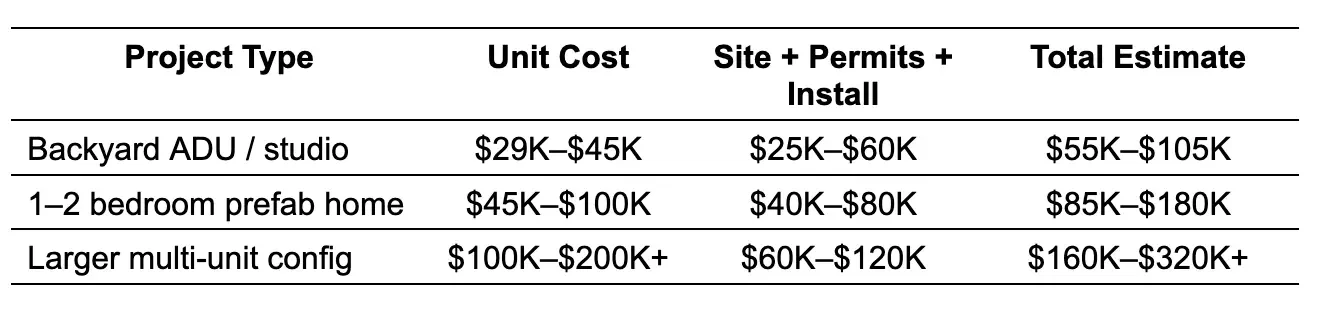
California's permitting and site costs are higher than the national average — but so is the value of the finished structure and the rental income potential. The economics, even in California, work in favor of prefab for buyers who approach the project with realistic expectations.
Getting Started
If you own land in California and are seriously considering a prefab home, the first steps are straightforward: confirm your zoning, get a preliminary site assessment, and start comparing manufacturers based on their documented California experience and transparency about what's included in their pricing.
Prefahb ships to California and begins every project with a site evaluation, so you know exactly what you're committing to before the build starts.
See Prefahb's models and pricing to start planning your California build.