
Prefab Container: What a Steel Box Can Become Beyond Four Walls and a Roof
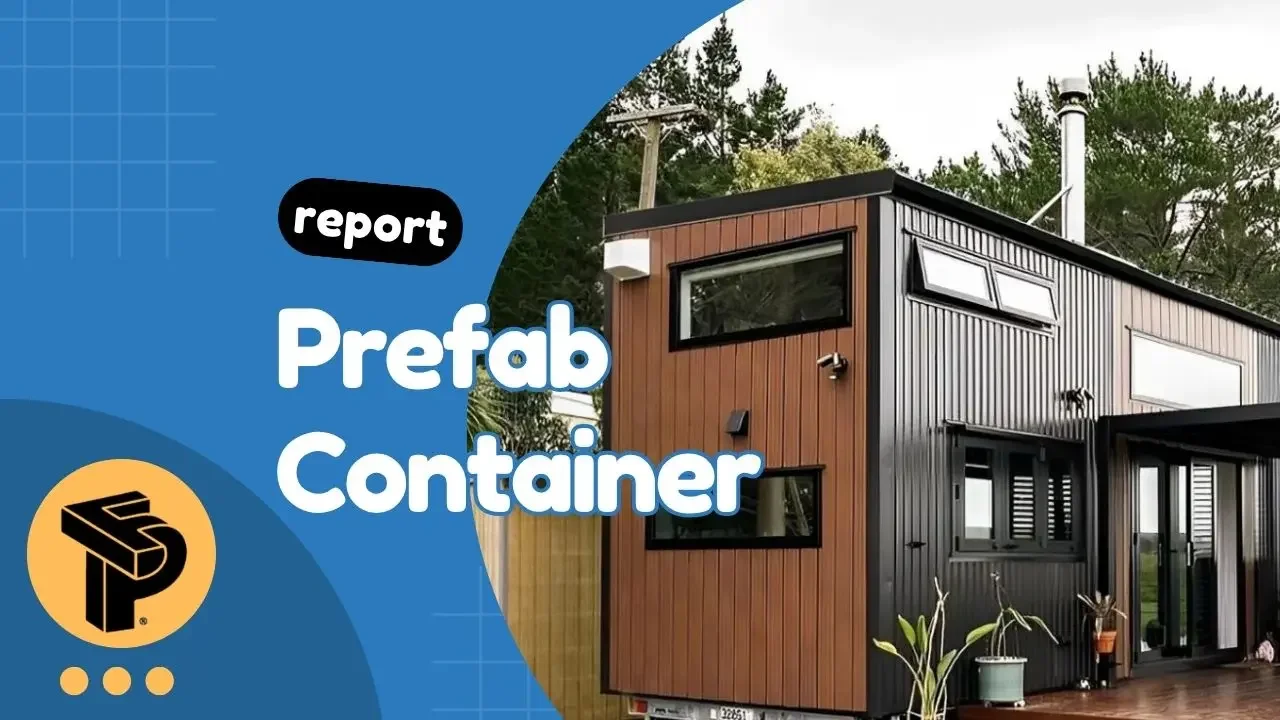
Most people encounter container architecture through the housing conversation. But the shipping container as a building module has applications well outside the residential market, and in many of those contexts, it performs even better than it does as a home.
The reasons are structural. A shipping container is a precision-engineered steel box, designed to carry tens of thousands of pounds stacked in a saltwater environment. As a building module, this engineering translates to rapid deployment, structural robustness, easy relocation, and a cost profile that conventional construction can't match at a comparable speed.
Here's where prefab containers are showing up in 2026, and what they cost.
The Backyard Office
This is the fastest-growing application of single-container prefab structures in the US residential market, and it makes obvious sense. Remote and hybrid work has created real demand for a workspace that's separate from the main house — quiet, distraction-free, and professional enough to take video calls from — without the expense and permanence of a full home addition.
A 20-foot container office fits comfortably into most suburban lots. At 160 square feet, it's enough for a proper desk setup, some storage, and a small meeting area. Finished with good lighting, climate control, and high-speed internet, it functions as well as any dedicated home office.
The advantages over a stick-built addition: faster installation (days vs. months), no disruption to the main house, lower cost, and portability — if you move, the structure can move with you.
A finished 20-foot container office unit typically runs $15,000–$40,000. All-in, with electrical connection, a small deck, and site prep, expect $30,000–$70,000. Compare that to a home addition of comparable size: $50,000–$120,000 with a construction timeline measured in months.
Prefahb's Model B201 (from $29,000) adapts naturally to the office use case with its Murphy bed (which doubles as a guest sleeping space when needed), fold-down desk, and solar upgrade option for properties where running an electrical line is inconvenient.
The Creative Studio
Artists, musicians, photographers, woodworkers, potters — anyone who needs a dedicated creative workspace that can accommodate mess, noise, or specialized equipment has historically been poorly served by residential architecture. Creative work doesn't happen well in spare bedrooms.
A 40-foot container studio gives 320 square feet of uninterrupted floor area — open, flexible, easy to clean, structurally robust enough to handle heavy equipment, and acoustically manageable with the right insulation. The steel walls can be mounted with hooks, shelves, and hanging systems without worrying about drywall anchors. Concrete or epoxy floor finishes handle spills and tools without complaint.
For musicians, acoustic treatment applied directly to the insulated interior walls creates a workable recording or practice space. For woodworkers and fabricators, a concrete floor and a large sliding door on the long face of the container provide workflow access that conventional rooms rarely allow.
The same unit price range as the office applies, $25,000–$60,000 for a finished studio container, with the specific fit-out depending on the creative discipline.
The Pool House
A container pool house is functionally one of the cleaner applications of prefab container construction. The program is compact and well-defined: changing room, shower, toilet, maybe a small kitchenette or wet bar, and outdoor connection to the pool deck. A single 20- or 40-foot container handles this program efficiently.
The steel shell is water-resistant by nature. The flat roof provides a clean profile that doesn't visually compete with the pool area. Large sliding glass doors on the pool-facing wall create the indoor-outdoor connection that defines good pool house design.
Finished pool house containers run $20,000–$55,000 for the unit. Because the structure is adjacent to the pool rather than requiring its own utility infrastructure from scratch, connection costs are typically lower than a standalone structure — electrical and water lines are often already nearby.
For hospitality properties — resorts, vacation rentals, glamping operations — a container pool house adds amenity at a fraction of the cost of conventional construction, with a visual profile that reads as deliberate design rather than budget compromise.
The Hospitality Unit
The glamping and boutique hospitality sector has been one of the most enthusiastic early adopters of prefab container structures, and for practical reasons. A resort or glamping property needs structures that can be deployed quickly, built to a consistent standard across multiple units, maintained without specialized skills, and replaced or reconfigured as the property evolves.
Container units deliver on all of these. A 40-foot container finished as a guest cabin — insulated, climate-controlled, with a bed, bathroom, and deck — can be manufactured off-site, shipped to the property, and installed in a fraction of the time that site-built cabins require. For a property adding five or ten units, that speed advantage is significant both for project cost and for time-to-revenue.
The aesthetic works in the hospitality context: exposed industrial materials, honest structure, strong indoor-outdoor connection. Guests who book a "container cabin" experience are opting in to the aesthetic — it's a feature, not a compromise.
Prefahb serves this market directly. The Model S201 ($6,950) and Model BT201 ($4,950) are positioned for this kind of deployment, compact, deployable structures at price points that make multi-unit hospitality projects financially viable. The Model Z201 ($5,950), with its folding container design, takes the deployment flexibility further: it ships flat and expands on-site, making it particularly suited to remote properties where access limits what can be delivered.
Retail and Commercial Spaces
Container retail — pop-up shops, food and beverage outlets, market stalls, temporary showrooms — has become a recognized format in the commercial real estate market. The combination of low cost, rapid deployment, and visual distinctiveness makes containers attractive for retail operators who want a physical presence without long-term lease commitments.
A single 40-foot container, opened on one long face with a large serving window or folding wall, makes a functional café, juice bar, or retail space. Two containers side-by-side create a boutique showroom. A cluster of containers arranged around a central courtyard creates a market or food hall format.
The commercial application typically requires more attention to local permitting — commercial use triggers different zoning and building code requirements than residential — but the fundamentals are the same. The container provides the structure; what goes inside and on the facade defines the business.
The Case for Thinking Beyond the Home
The shipping container's modularity, structural strength, and cost efficiency are format advantages that apply regardless of what the structure is used for. In residential applications, these advantages have to be balanced against the specific requirements of habitation — insulation, airtightness, interior finish quality, and so on.
In non-residential applications, some of those requirements are simpler (an office needs a comfortable temperature but not necessarily the same thermal performance as a bedroom in January), and the speed and cost advantages become even more dominant.
For property owners who have been thinking about a container home, it's worth considering whether the first container on the property might be a backyard office, a studio, or a pool house — a lower-cost entry point that demonstrates what the format can do before committing to a full residential build.
For commercial and hospitality operators, prefab containers represent a capital efficiency argument that's hard to argue with: faster deployment, lower cost per unit, and a distinctive aesthetic that serves many brands better than generic construction.
The container as a building module is more versatile than its industrial origins suggest. The applications are still being discovered.