
Luxury Manufactured Homes: What the Category Has Actually Become
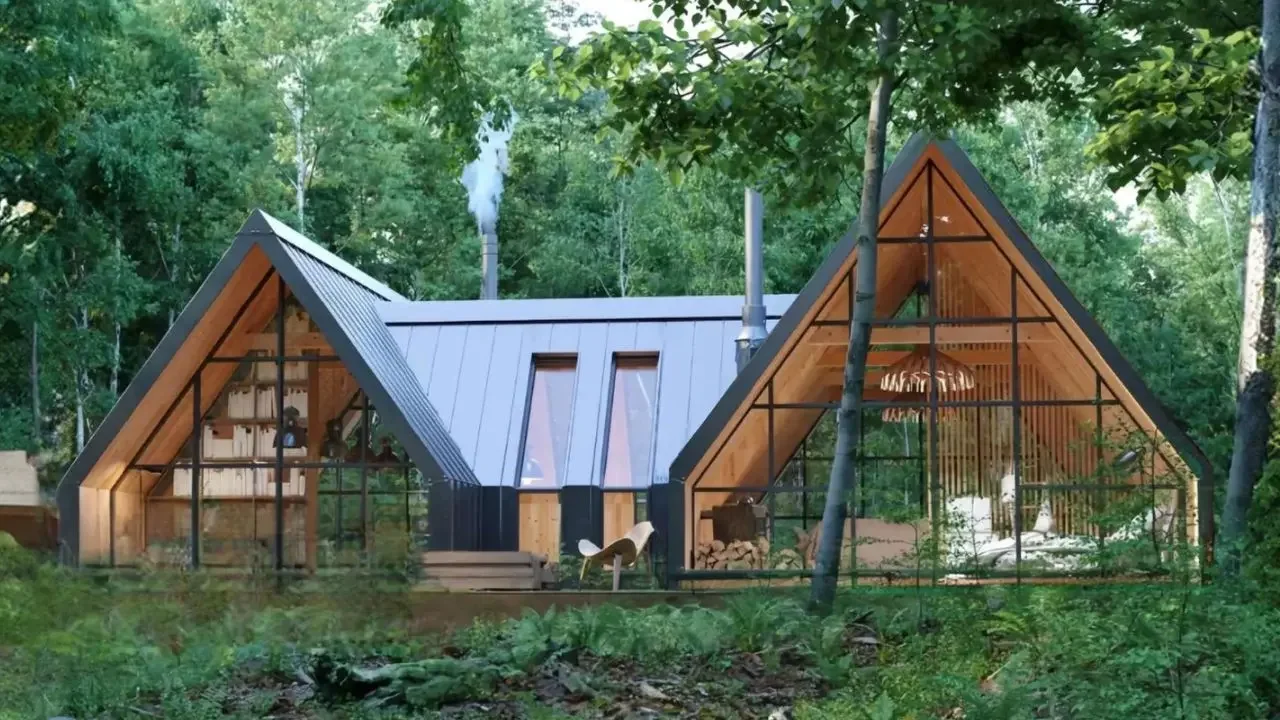
The phrase "luxury manufactured home" used to be a contradiction in terms. Manufactured housing meant park-model homes on leased land, vinyl siding, low ceilings — affordable, functional, and unambiguously not luxury. That association has persisted in public perception well past its sell-by date.
What the top tier of factory-built housing actually looks like in 2026 is something different entirely. The gap between a luxury modular home from a serious manufacturer and a luxury custom home from a quality local builder has narrowed to the point where the distinction is primarily process — where the home is built — rather than product: what you get when it's done.
This guide examines what luxury factory-built housing actually means at the top of the market, what separates genuine quality from inflated marketing, and what serious buyers should look for.
The Terminology Problem
"Luxury manufactured homes" conflates two regulatory categories that perform very differently as long-term assets:
HUD-code manufactured homes are built to federal HUD standards rather than local building codes. They're installed on non-removable steel chassis and historically classified as personal property (like a vehicle) rather than real property (like a house). Financing options are more limited, and historical appreciation has been weaker than site-built homes.
The HUD-code manufactured home market has premium tiers — larger floor plans, higher-grade finishes, more sophisticated mechanical systems — that represent genuine quality at their price points. Companies like Cavco, Clayton, and Champion all produce top-spec HUD-code homes that are well-designed and comfortable. But the regulatory classification creates limitations that luxury buyers typically want to avoid.
Luxury modular homes are built to local state building codes, placed on permanent foundations, and classified as real property. They finance, insure, and resell identically to site-built homes. When most people searching for "luxury manufactured homes" in 2026 are actually looking for, a luxury modular home on a permanent foundation is typically closer to what they want.
Luxury container-based homes are a third category — not HUD-code manufactured, not conventional modular, but factory-built structures using shipping containers as the structural module. These are built to local codes when permitted and installed on permanent foundations, giving them the same regulatory status as modular homes. The design aesthetic is distinct; the structural performance in some respects (lateral loads, durability) exceeds conventional modular construction.
What Makes a Factory-Built Home Genuinely Luxury
"Luxury" in the factory-built housing context means the same things it means in custom construction — and it's meaningful to apply the same evaluative standards.
Interior finish specification. The primary differentiator between market-rate and luxury factory-built homes is interior finish quality. Genuine luxury means: solid wood or frameless full-overlay cabinetry with soft-close hardware; stone (quartz, granite, or natural stone) countertops throughout kitchen and bathrooms; engineered hardwood or solid hardwood flooring; designer plumbing fixtures; tile work executed by skilled craftspeople rather than rushed installation crews; and trim details that are consistent, tight, and properly finished. These specifications can be found in factory-built homes at the premium tier; they're not present in mid-range or entry-level production.
Architectural floor plan quality. Luxury isn't only finishes — it's the spatial organization of the home. A luxury floor plan has: generous room proportions, efficient circulation that doesn't sacrifice usable space, logical relationship between public and private zones, strong indoor-outdoor connection, adequate storage integrated into the design rather than added as an afterthought, and ceiling heights of 9 feet or above. Many factory-built homes at lower price tiers use efficient but uninspiring floor plans; luxury tier products compete directly with architect-designed custom plans.
Structural and envelope performance. A luxury manufactured or modular home should be built to performance standards that exceed code minimums: advanced framing techniques that reduce thermal bridging, continuous exterior insulation rather than cavity-only insulation, triple-pane windows as standard rather than upgrade, and airtightness targets that require testing to verify. These performance features reduce operating costs for the home's life and represent genuine quality investment.
Mechanical systems. Premium HVAC — variable-speed heat pump systems, zoned climate control, ERV (Energy Recovery Ventilation) for continuous fresh air — are the norm in luxury factory-built homes. Smart home integration, whole-house water filtration, and backup power systems are standard at the upper tier.
Exterior design and materials. Luxury exterior finishes go beyond the standard vinyl siding of market-rate factory homes: fiber cement, engineered wood siding, metal panel systems, or natural timber cladding; architectural shingle or standing seam metal roofing; large format glazing with premium frames; designed entrance sequences that set the tone for what's inside.
The Luxury Modular Market: Who's Building It
Several manufacturers operate at the genuine luxury tier of factory-built housing in the US market. Understanding the landscape helps buyers calibrate expectations and pricing.
Method Homes produces architect-designed modular homes primarily for the Pacific Northwest market. Their work appears in architectural publications and competes directly with custom construction on design quality. Price point: $400–$700/sqft all-in, sometimes higher for fully custom configurations. Lead time: typically 12–18 months.
Dvele has built its market position around the intersection of luxury design, energy performance, and health-focused features. Their homes are designed to Passive House-adjacent performance standards with luxury finish quality. Price point: $350–$600/sqft all-in. Available primarily in California with broader US delivery developing.
Blu Homes operates in California with a range of steel-framed modular designs at the premium end of the market. Their steel framing enables long-span open floor plans that wood-frame modular can't match. Price point: $250–$450/sqft all-in.
Prefahb (Bali, Indonesia — serving US market) operates the container-based luxury tier. The Model R404 (from $195,000) and Model F (from $113,000) are the flagship products — multi-container configurations with architectural presence, premium interior specification, and the material quality advantage of Balinese craftsmanship at production costs that domestic US manufacturing at equivalent specification can't match. For buyers who want luxury container living rather than conventional luxury modular, Prefahb's upper-tier lineup is the relevant reference point.
Luxury Container Homes: The Distinct Category
The luxury container home market has developed independently from conventional luxury manufactured/modular housing, and the two are worth distinguishing.
A luxury container home uses shipping containers as the structural module — typically multi-container configurations that create spatial complexity and architectural presence at scales that single-container units can't achieve. The Corten steel structure enables structural moves (cantilevering, stacking with offsets, large-span openings) that conventional wood or light-gauge steel modular construction handles with more difficulty.
At the luxury tier, container homes are finished to the same standard as conventional luxury housing: stone countertops, hardwood floors, premium fixtures, architect-designed floor plans, and high-performance mechanical systems. The container shell becomes a structural foundation rather than an aesthetic statement — it's visible in the details and honest about its origins, but it doesn't dominate the interior character.
The cost advantage of container-based luxury homes relative to conventional luxury modular or custom construction comes from two sources: the existing structural shell (the container) reduces new material cost, and manufacturing in lower-cost markets (like Bali) enables skilled craftsmanship at production costs below US domestic labor rates. Prefahb's R404 at $195,000 represents genuine luxury quality at a price that comparable US domestic production can rarely match.
What to Expect at Each Price Tier
$150,000–$250,000 (unit price): Entry-level luxury. Better-than-average finish quality, some architectural consideration in the floor plan, upgraded mechanical systems. Genuinely nicer than market-rate production but not comparable to true high-end custom construction. Prefahb's Model A2030 ($91,200) and Model P202 ($109,995) represent this tier in container-based construction.
$250,000–$450,000 (unit price): Mid-range luxury. Premium finish specification throughout, architect-influenced floor plans, high-performance envelopes, full mechanical system upgrades. Competitive with most custom construction at the same price point on finish quality and performance. Prefahb's Model F (from $113,000) and Model R404 (from $195,000) anchor this tier — the all-in US project cost for these models falls in this range.
$450,000–$700,000+ (unit price): True luxury equivalence. Fully custom specifications, the highest-grade finish materials, building performance that exceeds code by a significant margin, complete smart home integration. The Method Homes and Dvele upper-tier products occupy this space domestically.
The Investment Case
Luxury modular and container homes on owned land in desirable locations have performed as real estate investments comparably to site-built homes in the same areas — the land value is the primary driver, and the factory-built structure on that land appraises and appreciates on the same basis as any other residential improvement.
The investment case for luxury factory-built homes is also partly about efficiency: the same budget deployed in factory production rather than site construction typically produces more quality per dollar — more finish specification, better performance, faster delivery — than equivalent custom construction spending.
For buyers who want a home that lives and performs like a luxury custom residence, at a lower cost and faster timeline, the luxury factory-built tier in 2026 is genuinely capable of delivering that.
Explore Prefahb's luxury container home models — from the Model F to the flagship R404.