
Bubble Tent: What Makes a Good One and How They're Being Used
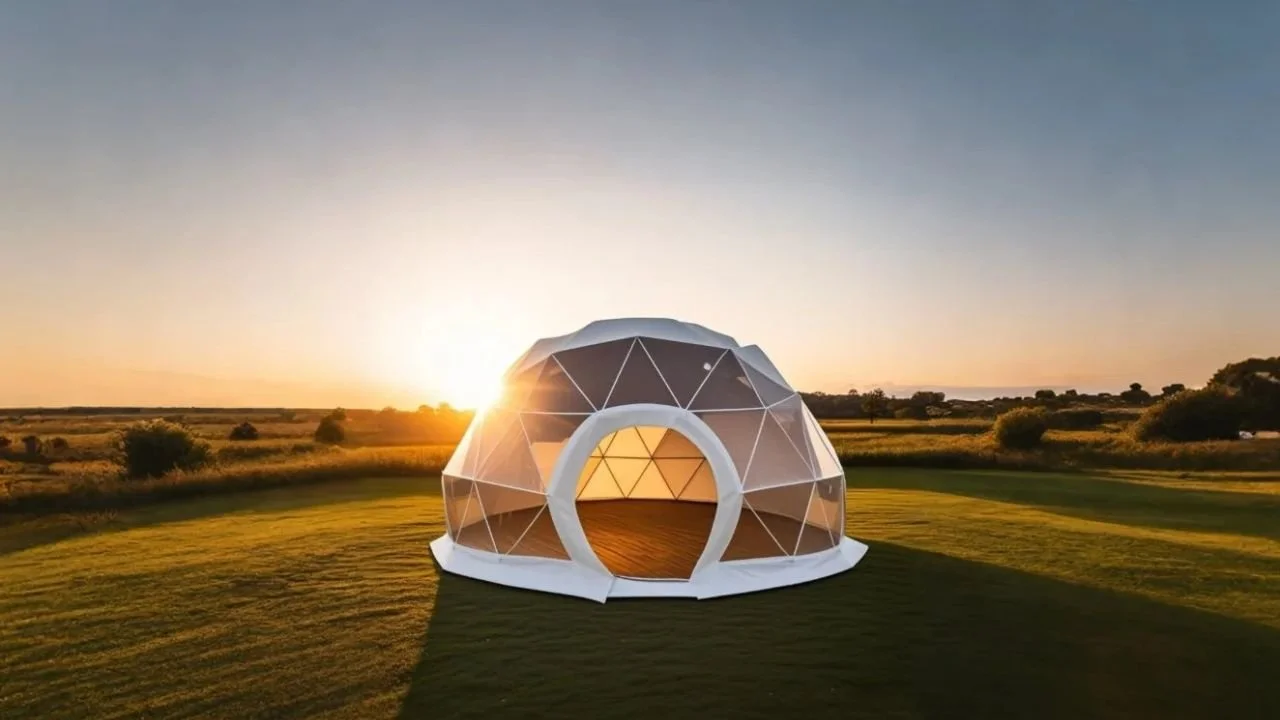
There's a moment that explains the appeal of a bubble tent better than any description: lying in bed looking up through transparent walls at a sky full of stars, with the sound of wind in the trees and the warmth of a climate-controlled interior. It's an experience that sits exactly at the intersection of outdoor immersion and indoor comfort — which, as a value proposition, turns out to be enormously appealing to a wide range of people.
Bubble tents have moved from novelty installations at a handful of European luxury resorts to a recognized glamping category with a global market. They appear on popular short-term rental platforms regularly, command premium nightly rates, and have become a serious revenue generator for hospitality operators who understand how to site and market them.
Here's what makes a bubble tent work well, technically and experientially — what different types cost, and how they're being used across residential and commercial applications.
What a Bubble Tent Actually Is
The defining characteristic is transparency. A bubble tent is a dome-shaped structure with transparent or semi-transparent walls that allow occupants to see the surrounding environment — sky, landscape, forest, coastline — from inside. The "bubble" metaphor is apt: a contained, comfortable environment suspended within and visually connected to the natural world outside.
Two fundamentally different structural approaches produce the bubble tent experience:
Inflatable bubble tents. Air-inflated PVC or TPU film structures that maintain their shape through continuous low-pressure inflation (typically 100–300 Pa of positive pressure above ambient). A small, quiet electric pump runs continuously to maintain pressure. The entire structure is transparent or near-transparent. Inflatable bubble tents are typically portable — they can be deflated, packed, and relocated.
Rigid dome structures (geodesic domes). Steel or aluminum geodesic frame structures with transparent polycarbonate or glass panel infill. Not technically "inflatable," but often marketed alongside bubble tents because they serve the same experiential function. Rigid domes are permanent or semi-permanent installations — they don't deflate and can't be easily relocated. More durable and better-insulated than inflatable designs; significantly higher cost.
Hybrid designs. Some products combine a rigid base structure or floor platform with an inflatable transparent dome on top — providing the stability and insulation of a permanent foundation with the visual lightness of an inflatable canopy.
The Glamping Application: Why Bubble Tents Generate Returns
The commercial case for bubble tents in glamping is straightforward and well-documented. On short-term rental platforms, bubble tent accommodations consistently command nightly rates 2–4x higher than conventional camping or standard cabin accommodations on the same property — for a structure that costs a fraction of building a conventional cabin.
The revenue math is compelling: a glamping-grade bubble tent unit at $15,000–$25,000 all-in (tent, platform, furnishings, utility connection) generating $200–$400/night at 60–70% occupancy pays back the investment in 18–36 months in most US markets with outdoor tourism demand. After payback, the unit generates profit for 10–15 years of serviceable life.
The marketing appeal is also clear. Bubble tent listings photograph exceptionally well — the transparent dome filled with warm interior light against a dark sky, or a morning interior shot with landscape visible through the walls, produces images that perform strongly on booking platforms. The "sleep under the stars" narrative resonates across a wide demographic: couples seeking romantic experiences, families wanting nature-connected stays, and individual travelers pursuing distinctive experiences.
The site selection and positioning decisions determine whether the appeal translates into bookings. Bubble tents work best on properties with:
Strong night sky (low light pollution for stargazing)
Distinctive landscape views (forest, mountain, coastal, or water)
Some level of privacy between units
Access to outdoor activities that complement the immersive accommodation experience
Bubble tents on featureless suburban lots or sites with significant light pollution don't generate the same booking performance regardless of how well the tent itself is specified.
Types and Specifications: What to Look For
Inflatable single-wall designs (entry-level, $500–$3,000)
Basic inflatable PVC bubble tents in this range are designed for backyard recreational use — not serious overnight accommodation. They typically have no insulation, no climate control provision, and limited ventilation. In mild weather, they're enjoyable; in hot, cold, or high-humidity conditions, they become uncomfortable quickly.
Condensation is the most common problem with single-wall inflatable designs. As interior air warms and the cool transparent surface radiates heat outward, moisture condenses on the inner surface — initially as mist, then as water droplets. This makes the view opaque and the interior damp. Single-wall designs manage condensation poorly because there's no thermal break between interior and exterior surfaces.
Suitable for: casual backyard use, parties and events, occasional recreational use in mild climates. Not suitable for serious overnight accommodation.
Inflatable double-wall designs (mid-range, $3,000–$12,000)
Double-wall bubble tents use two layers of inflatable material with an air gap between them — similar in principle to double-pane windows. The air gap provides insulation and dramatically reduces condensation by keeping the inner surface warmer. Legitimate overnight accommodation in three-season conditions becomes achievable.
Quality double-wall designs include: a proper entrance tunnel (an airlock-style entry that doesn't require the dome to be deflated to enter), ventilation systems that allow fresh air circulation without pressure loss, and anchor systems designed for wind resistance. At the upper end of this range, units include climate control provisions and flooring systems.
Suitable for: serious glamping use in spring, summer, and fall; private backyard accommodation; hospitality properties in moderate climates.
Commercial glamping-grade bubble tents ($12,000–$30,000+)
Purpose-built for hospitality use, these units are designed for multi-year continuous outdoor deployment. Characteristics include: reinforced TPU (thermoplastic polyurethane) film rather than PVC — more UV-resistant, more tear-resistant, and retains clarity longer; integrated HVAC provision (typically a through-wall mini-split connection); proper insulated flooring; wind-rated anchor systems; and entry systems designed for security and weatherproofing.
At this specification level, bubble tent accommodations are genuinely usable year-round with appropriate HVAC equipment — the structure itself handles wind, rain, and moderate snow loads. UV degradation of the transparent film is the primary long-term maintenance concern; most commercial films are rated 5–7 years before significant yellowing occurs.
Suitable for: commercial glamping operations, resort amenities, high-end hospitality applications.
Rigid geodesic domes ($5,000–$40,000+)
The most durable transparent outdoor accommodation structure. Steel or aluminum geodesic frames are permanent installations; the transparent polycarbonate or tempered glass panels provide better insulation than any inflatable alternative and don't suffer from UV yellowing on the same timeline. The trade-off is cost, permanence (not relocatable), and the loss of the bubble tent's characteristic visual lightness — geodesic dome frames are visible and structural, creating a different aesthetic.
For hospitality operators committed to a specific site, geodesic domes are the better long-term investment. For buyers who value the inflatable bubble tent's visual character or need relocation flexibility, the investment in dome infrastructure isn't justified.
The Private Residential Application
Bubble tents have a growing private residential market that isn't primarily about short-term rental income. Homeowners are installing bubble tents in gardens, on pool decks, and in wooded parts of their properties for personal use — as meditation spaces, star-gazing experiences, overflow guest accommodation, or simply because the experience of sleeping under a transparent ceiling in a private garden is genuinely distinctive.
At the private residential scale, the investment calculus is different from commercial glamping. The $8,000–$15,000 cost of a quality double-wall bubble tent for private use isn't justified by rental income; it's justified by the experience quality and the property amenity value.
For properties with strong night sky access, a well-positioned bubble tent in the garden becomes one of the more memorable things the property offers — to guests, to family, and to prospective buyers if the property is eventually sold. It's a relatively low-cost addition relative to other garden investments with similar experience impact.
Bubble Tents and the Off-Grid / Container Home Intersection
Bubble tents appear frequently alongside container homes in the glamping and alternative accommodation space — partly because the aesthetic languages are compatible (both embrace non-conventional structures as design choices), and partly because the clientele is similar.
A property that offers a container home as the primary accommodation with a bubble tent as an add-on experience — a stargazing dome separate from the sleeping quarters — creates a layered offering that commands higher nightly rates than either structure alone. The container home provides the comfort, privacy, and kitchen amenity that make a stay genuinely restful; the bubble tent provides the spectacular experience moment that guests remember and photograph.
This pairing is increasingly common in high-performing short-term rental properties in the US outdoor tourism market. The combined investment ($30,000–$60,000 for the container home plus $10,000–$20,000 for the bubble dome installation) produces an accommodation offering that consistently commands $250–$500+/night in markets with outdoor recreation demand.
Prefahb's compact container models, particularly the Model B201 (from $29,000) and the Model Z201 ($5,950) are well-suited to this combination deployment, providing the primary accommodation infrastructure alongside which a bubble tent or dome becomes the elevated experience element.
Practical Considerations Before Buying
Site assessment first. The visual experience of a bubble tent depends entirely on what you're looking at from inside it. Before purchasing, spend time on the proposed site at the time of day (and ideally the time of year) when the tent will be most used. Night sky quality, landscape view, light pollution from neighboring properties — all of these determine the experiential quality more than the tent specification.
Utility access. A bubble tent that requires guests to leave in the middle of the night to use bathroom facilities isn't a quality glamping experience. Either the tent needs to include a bathroom module, or facilities need to be immediately adjacent. Climate control (HVAC) requires an electrical connection; battery-powered portable units work but are less reliable for extended use.
Wind exposure. Inflatable bubble tents are wind-sensitive. Commercial units are typically rated to 45–60 mph winds when properly anchored; basic consumer units much less. Sites with regular high wind events aren't suitable for inflatable designs; rigid geodesic domes handle wind exposure significantly better.
Permitting. Bubble tents used as commercial short-term rental accommodations may require building permits and business licenses in your jurisdiction, as well as specific safety requirements (smoke detectors, egress compliance, electrical certification). Confirm local requirements before deploying commercially.