
Luxury Container Homes: What Separates the Real Thing From the Marketing
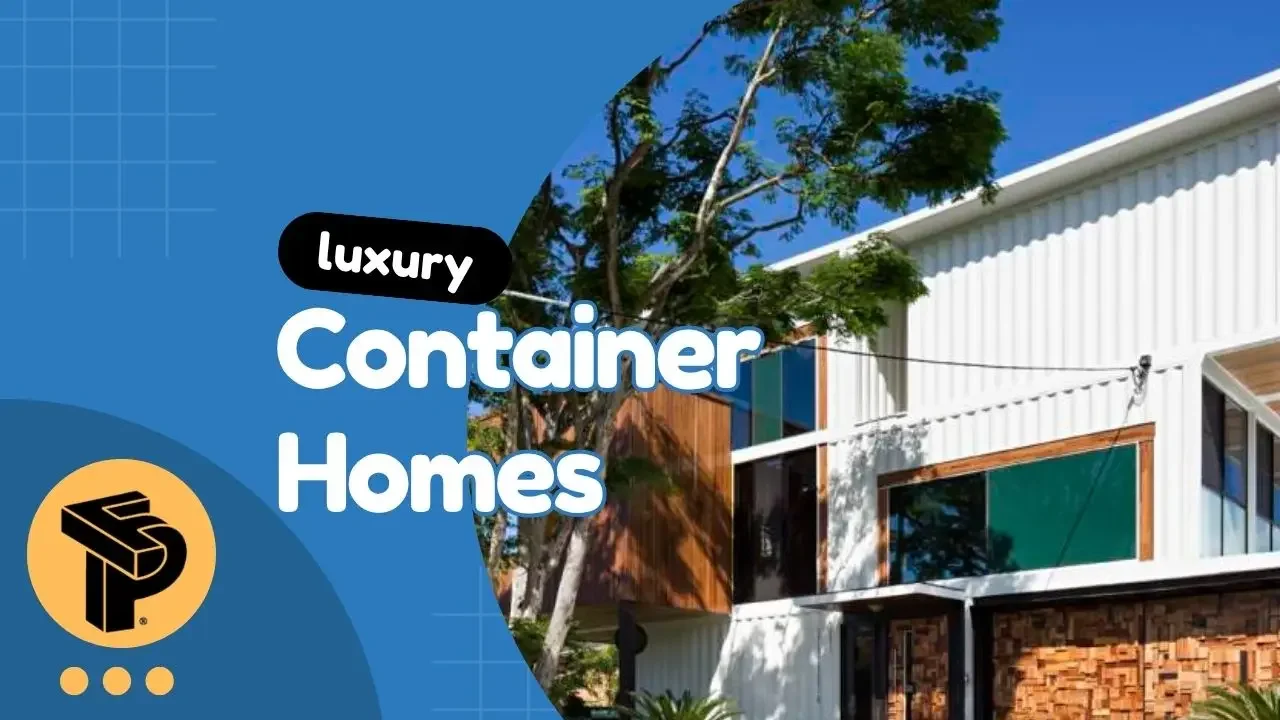
The word "luxury" gets applied to everything now. A $45,000 container with a coat of paint and some Instagram-worthy staging gets called luxury. That kind of inflation makes the word nearly useless, which is a problem when you're actually trying to spend serious money and want to know what you're getting.
So let's be precise. What does a genuinely high-end container home look like? What does it actually cost? And what distinguishes real luxury from a well-photographed version of the ordinary?
The Container as a Starting Point, Not a Constraint
The fundamental misconception about luxury container homes is that the container is the product. It isn't. The container is the structural module, the starting point from which a home is designed, engineered, and finished.
In the same way that luxury custom homes start from a concrete foundation and steel frame without being defined by those materials, a luxury container home starts from a steel shipping container without being limited by it. What gets added on top of and inside of that container is what determines whether the result is genuinely luxurious or just novelty.
The structural advantage of starting from a shipping container in a high-end context is actually significant. Containers are engineered to carry 67,000 pounds stacked nine high on ocean vessels. That structural reserve means you can cut out large sections for floor-to-ceiling glazing, cantilever containers over each other at dramatic angles, and create complex multi-unit configurations that would require expensive custom steel fabrication in conventional construction. In a luxury container home, the container's strength enables architectural moves that would be cost-prohibitive otherwise.
What Defines a Luxury Container Home
Genuine luxury container architecture has recognizable characteristics that separate it from the $60,000 single-unit entry-level market.
Multi-container configuration. A single 40-foot container is 320 square feet. A luxury home is rarely a single container. High-end builds typically involve four to eight containers arranged in configurations that create complex spatial relationships — volumes cantilevered over each other, spaces that step down a hillside, or L- and U-shaped arrangements that create interior courtyards.
Large-format glazing. The structural capacity of the container frame allows for significant sections of the steel walls to be removed and replaced with floor-to-ceiling glass without compromising structural integrity. In luxury builds, this is used to blur the boundary between interior and exterior, capture specific views, and create the kind of light quality that makes a home feel genuinely special to be inside.
Premium interior specification. This is where most of the cost differential lives. Honed stone countertops, wide-plank hardwood or polished concrete floors, custom cabinetry with soft-close hardware, radiant floor heating, integrated audio-visual systems, high-end plumbing fixtures — none of these are unique to container construction, but all of them cost the same as they do in any other high-end home. The container shell is relatively inexpensive; the interior finish is not.
Rooftop terraces and outdoor living. Container roofs are flat and structurally capable of supporting a rooftop terrace with furniture, plantings, and even a plunge pool. In a luxury context, this transforms a typically unused surface into a prime outdoor living space — a genuine architectural advantage over pitched-roof conventional construction.
Site-specific design. Luxury container homes are designed for specific sites, not off a shelf. The orientation is optimized for views and solar performance. The configuration responds to the topography. A home designed for a hillside property in Malibu looks fundamentally different from one designed for flat acreage in Texas — as it should.
Mechanical systems quality. High-performance HVAC, smart home integration, whole-house water filtration, commercial-grade electrical service — these are standard in luxury construction and should be in a luxury container home. The container shell is inherently airtight, which makes high-efficiency climate systems more effective (and more important to get right).
Prefahb's Luxury Lineup
Prefahb's upper-tier models represent what luxury container architecture looks like when production quality and design intent converge.
The Model R404 (from $195,000) is the flagship — a multi-container configuration designed for buyers who want the full luxury container living experience without the multi-year wait of custom construction. The design integrates the spatial generosity, high-end specification, and architectural presence that define genuine luxury at a price point that remains significantly below equivalent custom builds.
The Model F (from $113,000) and Model P202 ($109,995) represent the entry into serious architectural territory, homes that read as designed objects, not just shelter, while remaining accessible relative to the custom alternative.
The Model A2030 ($91,200) sits at the boundary between premium and luxury, with a configuration and finish level that outperforms most homes at its price point but doesn't reach the full specification of the flagship tier.
What distinguishes Prefahb's production approach is the manufacturing base. The Ubud, Bali facility brings Balinese craft tradition, attention to material quality, joinery precision, and the relationship between built form and natural setting, to the container home format. This is visible in the finish quality of delivered units in a way that's genuinely difficult to replicate in markets where manufacturing costs are higher.
What Luxury Container Homes Actually Cost
Let's be direct, because the ranges matter for planning.
Unit price: $150,000–$500,000+ for a genuine luxury container home. Single-container units under $100,000 are not luxury by any meaningful definition — they're quality entry-level or mid-range builds. Multi-container architect-designed configurations at the high end of the market can exceed $500,000 for the unit alone.
All-in costs: Add 30–60% on top of the unit price for site preparation, foundation engineering, shipping, installation, utility connections, permitting, and landscaping. A $195,000 luxury container unit realistically costs $280,000–$350,000 all-in on a reasonably accessible site, and more on challenging terrain.
Comparison to custom construction: A custom-built home of equivalent quality and square footage in most US markets costs $400,000–$800,000+ in construction alone, excluding land. A luxury container home at $280,000–$400,000 all-in represents genuine value at equivalent or comparable quality, with the additional advantages of faster delivery and more consistent production quality.
The Honest Caveat About "Luxury" in Container Marketing
A significant portion of what's marketed as luxury container homes online isn't. Renders of unbuilt designs, single containers with attractive finishes photographed against dramatic backdrops, "luxury" applied to anything with a nice kitchen, the marketing noise is real.
The test for genuine luxury is simple: ask for real photos of delivered units (not renders), ask for the spec sheet of what's actually included, and confirm that the manufacturer has built and delivered homes at the scale and finish level you're considering. A luxury container manufacturer should be able to show you real results, not just promise them.
Prefahb's model pages include real photos alongside specifications, which is the baseline standard for any serious manufacturer.
Is a Luxury Container Home Right for You?
The buyer who gets the most from a luxury container home is typically someone who values the architectural distinctiveness of the form, has a site where the container aesthetic makes sense (rural acreage, coastal land, mountain property, or urban lots where the modern aesthetic fits the context), and wants custom-level quality without the two-year custom construction timeline.
If you're looking for something that reads as a conventional luxury home — traditional forms, classical materials, historical references — a container home is probably not the right tool. The aesthetic is specific: industrial-meets-refined, horizontal-and-precise, honest-about-its-structure.
For buyers who want exactly that, there's nothing quite like it.
Explore Prefahb's luxury and premium models at the models shop.