
Eco-Friendly Prefab Homes: Separating What's Real From What's Marketing
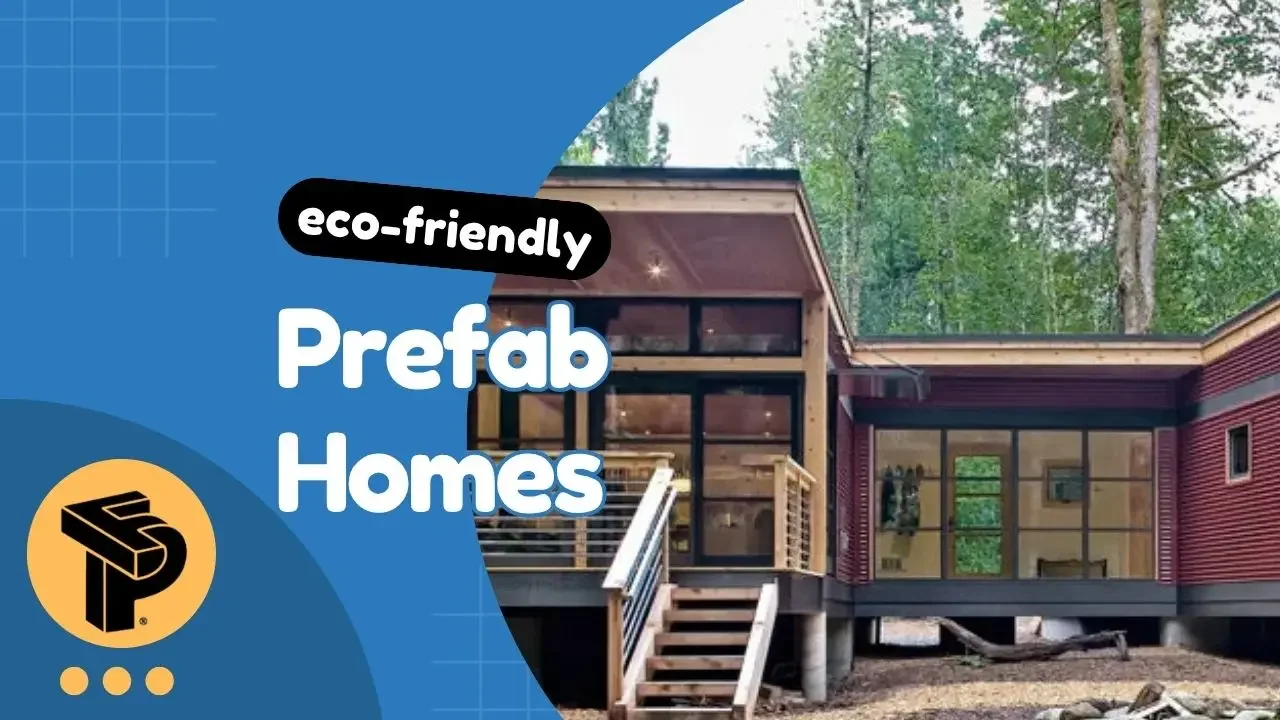
"Eco-friendly" has become one of the most meaningless phrases in residential construction. Applied to everything from a home with one LED bulb to a certified net-zero building, it covers a range so wide that the term has nearly stopped communicating anything useful.
In the prefab home market specifically, this problem is acute. Almost every manufacturer describes their product as sustainable, green, or eco-friendly. Almost none of them tell you what that actually means in measurable terms.
This article attempts to fix that. Here's what genuinely makes a prefab home environmentally better, what's mostly marketing, and how to evaluate specific products against those criteria.
Why Prefab Has a Real Sustainability Advantage (Before You Even Look at the Specs)
The environmental case for prefab construction starts before the home ever arrives on site in the factory.
Site-built construction is genuinely wasteful. Lumber is cut to length and the offcuts go to the dumpster. Framing errors require tear-out and replacement. Materials left on-site get rained on, damaged, and discarded. Industry studies estimate that a typical site-built home generates 3–7 pounds of waste per square foot of construction — meaning a 2,000 square foot home produces 6,000–14,000 pounds of construction waste.
Factory production cuts this dramatically. Materials are ordered to precise quantities, offcuts are reused in other units or recycled at the facility rather than landfilled, and the controlled environment prevents weather damage. Some manufacturers report 50–90% reductions in waste compared to equivalent site-built construction.
This is a real, quantifiable environmental benefit that applies to prefab homes in general — before any green features are added.
The Embodied Carbon Question
Embodied carbon — the carbon emitted in the production of building materials — is increasingly recognized as a significant portion of a building's lifetime environmental impact. For homes that are well-insulated and efficiently operated, embodied carbon can represent 50% or more of total lifetime emissions.
Container-based prefab homes have an interesting profile here. A used shipping container avoids the energy-intensive production of new structural steel — the container's embodied carbon is already "spent" in its previous life moving freight. Repurposing it into a home extracts further value from that embedded energy rather than adding to it.
New structural materials — framing lumber, engineered panels, concrete foundations — all carry embodied carbon that should factor into a genuinely sustainable building's assessment. A manufacturer who only talks about solar panels and recycled insulation without addressing the embodied carbon in their structural system is telling an incomplete story.
What Actually Matters for Operating Sustainability
Once the home is built, its ongoing environmental performance is primarily determined by energy use. Here's what makes the real difference, in order of impact.
Thermal envelope performance. The biggest driver of residential energy use is heating and cooling. The thermal envelope — insulation levels, airtightness, window performance — determines how much energy is needed to maintain comfortable temperatures. A home with R-30 walls and high-performance windows uses a fraction of the energy of one with standard code-minimum insulation.
For container-based homes, the thermal envelope requires special attention. Steel conducts heat well, which works against you if the insulation strategy isn't right. The best container home manufacturers use closed-cell spray foam on the interior (which serves as both insulation and vapor barrier), exterior continuous insulation, or both. The target should be R-values of at least R-20 for walls and R-30+ for roofs in most US climates.
Airtightness. A well-insulated home that leaks air is still an energy-inefficient home. Airtightness is measured by blower door testing (the n50 test) and expressed in air changes per hour at 50 pascals. Code minimum in most US jurisdictions is around 3.0 ACH50. A high-performance home targets under 1.0; a passive house targets under 0.6.
Container homes have a natural airtightness advantage — the welded steel shell is inherently tight, and the main work is sealing the penetrations (windows, doors, mechanical connections). A container home manufacturer who pays attention to this can achieve very good airtightness with modest effort.
Renewable energy. Solar panels are the most visible green feature on prefab homes, and for good reason — they directly reduce or eliminate grid electricity use. But solar only makes sense after the envelope is optimized. A poorly insulated home with solar panels is spending money generating electricity to heat and cool a leaky box. Insulate first, then add solar.
Prefahb's Nomadic Package, available on the Model B201 and other models, adds a roof solar system and 220V plug-in to enable off-grid operation. Combined with the wood-burning stove for heating, it creates a genuinely energy-independent system — but only fully realizes its potential on a well-insulated unit.
Water systems. Residential water use is the second most important environmental variable after energy. Low-flow fixtures, greywater recycling systems (where permitted), and rainwater harvesting all contribute meaningfully. These are add-on features that most manufacturers offer as options rather than standard inclusions.
The Green Roof Question
Garden roofs — a layer of growing medium and plants installed on a flat or low-slope roof — are frequently marketed as an eco-friendly feature. The environmental benefits are real but limited: modest insulation improvement, stormwater management, urban heat island mitigation, and habitat value.
What a green roof is not is a substitute for high-performance insulation. The R-value contribution of a typical extensive green roof is around R-10 — helpful, but not transformative. A home that markets its garden roof as its primary eco-feature while using minimal wall insulation has its priorities backwards.
Prefahb's Green Package includes a garden roof option alongside a circular staircase — it's a genuine aesthetic and environmental upgrade, and it's priced as a package addition rather than presented as the primary sustainability claim.
Ecological Prefab Homes: What the Term Should Mean
"Ecological" as applied to homes implies something specific: that the home operates in relationship with rather than in opposition to its natural setting. This goes beyond energy efficiency to include site design, landscape integration, material choices, and water management.
A genuinely ecological prefab home:
Sits lightly on the land — minimal grading, preserved existing vegetation where possible, permeable surfaces around the structure rather than impervious hardscape.
Uses materials that are responsibly sourced — FSC-certified timber, recycled-content materials where structural performance allows, finishes with low VOC emissions that maintain indoor air quality.
Manages water on-site — greywater recycling where permitted, rainwater harvesting for irrigation, native and drought-tolerant landscaping that requires no supplemental irrigation once established.
Operates efficiently — not just passively efficient but actively managed, with energy monitoring systems that make consumption visible and controllable.
Is designed for longevity — a sustainable building is one that lasts. Materials chosen for durability, details designed to resist moisture damage, structural systems that can accommodate future changes in use. Container-based construction scores well here: steel lasts longer than wood in most environments, is pest-resistant, and doesn't rot.
Questions to Ask Any "Eco-Friendly" Prefab Manufacturer
Before accepting a manufacturer's sustainability claims, ask these:
What are the R-values for wall assembly, floor assembly, and roof assembly?
What is the target airtightness (ACH50) and how is it tested?
What is the embodied carbon footprint of the structural system?
What percentage of construction waste is diverted from landfill?
What certifications does the building achieve or target (ENERGY STAR, Passive House, LEED)?
What sustainable material sourcing standards apply to the framing lumber, insulation, and finish materials?
A manufacturer who can answer these questions with specific numbers is taking sustainability seriously. One who responds with vague language about "green principles" and points to the solar panel option is not.
The Bottom Line
Prefab construction has a genuine head start on sustainability compared to site-built alternatives, for structural reasons that apply across the category. But the gap between a nominally "eco-friendly" prefab home and a genuinely high-performance one is significant — and it's measured in insulation R-values and airtightness numbers, not marketing language.
The good news: the best eco-friendly prefab homes available in 2026 are genuinely impressive from an environmental performance standpoint. The work is finding them behind the noise.