
How Much Do Container Homes Cost? Real Numbers for 2026
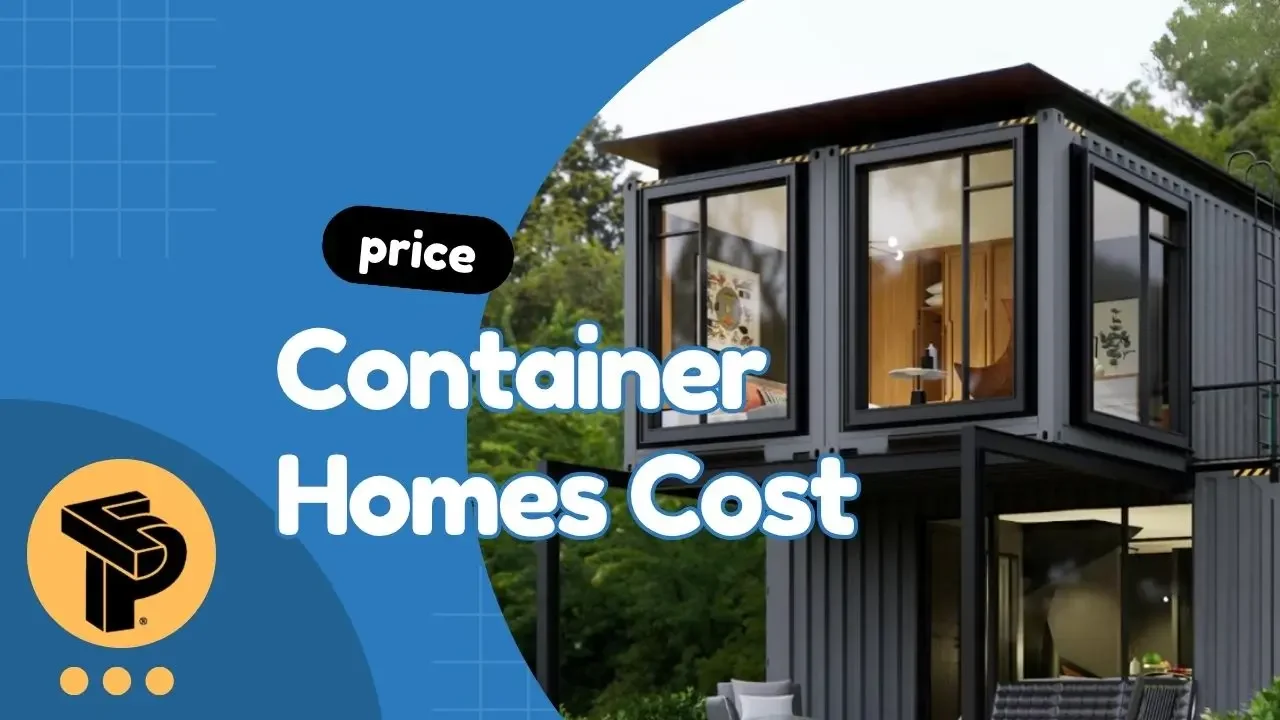
The number most people encounter first — "container homes start at $10,000!" — is technically accurate and practically useless. Yes, you can buy a used shipping container for $3,000–$5,000. What you cannot do is live in it for that amount. The gap between a raw container and a finished, code-compliant, livable home is where most of the cost actually lives.
This article gives you numbers that are actually useful: what finished container home units cost at different sizes and finish levels, what the full project costs look like once you add everything required to move in, and what specific factors push your project toward the high or low end of each range.
The Two Numbers You Need
Before anything else, understand that container home costs have two components that need to be tracked separately:
Unit cost — what the manufacturer charges for the container home itself, as built and ready to ship. This is what's advertised on most manufacturer websites.
All-in project cost — unit cost plus everything else: foundation, site preparation, shipping to your location, installation labor, utility connections (water, sewer/septic, electrical), permits and fees, landscaping, and contingency. This is what you actually spend.
The difference between these two numbers is typically 40–70% of the unit cost. A container home advertised at $50,000 realistically costs $75,000–$85,000 all-in on a favorable site, and more on a challenging one.
Container Home Unit Costs by Size and Finish Level
Entry Level: $5,000–$30,000
At the bottom of the range, you're looking at compact single-container structures, 20-foot units (160 sqft) designed as studios, backyard offices, or basic sleeping quarters. These arrive with minimal interior finishing — insulation, basic electrical rough-in, and an exterior weather seal, but limited kitchen or bathroom specification.
Prefahb's Model BT201 ($4,950), Model Z201 ($5,950), a folding container design), and Model S201 ($6,950) sit at this tier. They're real structures, not raw containers — but they're starting points that assume buyers will complete some finishing on their end or use them as non-full-time-residential structures.
Mid-Range Studio/1-Bedroom: $25,000–$65,000
The most populated segment of the container home market. Single 40-foot containers (320 sqft) finished to full residential standard — insulation, electrical, plumbing, kitchen, bathroom, interior finish materials, and exterior cladding. Livable immediately upon installation and utility connection.
Prefahb's Model B201 (from $29,000) and Model H201 (from $39,000) are representative of this range. The B201 includes a murphy bed, fold-down desk, and wood deck; optional packages add solar, garden roofing, or outdoor kitchen components.
Mid-Range 2-Bedroom / Multi-Container: $60,000–$130,000
Two to three container configurations producing 640–960 sqft of living space. Proper bedrooms, full kitchen, 1–2 bathrooms, indoor-outdoor connection. These are full family homes, not just compact studios.
Prefahb's Model P201 (from $59,950), Model A2030 ($91,200), and Model P202 ($109,995) cover this segment. The A2030 in particular represents what multi-container design looks like at the mid-range price point, a real home with genuine architectural presence.
Premium / Luxury: $110,000–$250,000+
Multi-container configurations with premium interior specification, large-format glazing, rooftop terraces, and architect-designed floor plans. These compete directly with custom construction on quality; their advantage is speed and a distinctive aesthetic that can't be replicated by conventional building.
Prefahb's Model F (from $113,000) and Model R404 (from $195,000) anchor this tier. The R404 is the flagship, a multi-unit luxury configuration for buyers who want container living without any material compromise.
All-In Cost Estimates by Project Type
Here's what complete container home projects realistically cost in the US, from signed contract to move-in:

Note that site costs are relatively fixed regardless of unit cost, you still need a foundation, utility connections, and permits whether the unit costs $30,000 or $150,000. This means the percentage overhead is much higher on cheaper units, which is worth understanding when budgeting.
What Drives Container Home Costs Up
Finish level. The container structure itself is a small percentage of total cost for well-specified homes. The kitchen (cabinets, countertops, appliances), bathroom (fixtures, tile, plumbing), flooring, and interior finishes are where most of the unit cost lives, and where the range is widest. Standard laminate countertops and vinyl flooring cost a fraction of stone countertops and hardwood, and the gap adds up across the whole home.
Multi-container complexity. Each additional container adds unit cost, delivery cost (more freight), foundation cost (more bearing points), and structural engineering cost (more connections). A four-container build isn't just twice the cost of a two-container build — it's more, because complexity scales faster than linear.
Site difficulty. Remote locations, steep terrain, poor soil conditions, and difficult delivery access all add to site costs. The most expensive component of many container home projects isn't the structure, it's getting it to the site and making the site ready for it.
Location. US labor costs for site work, permitting fees, and impact fees vary significantly by state and county. California, Hawaii, and major coastal metros consistently run 30–50% higher than national averages on everything from excavation to electrical work.
International shipping. For buyers purchasing from manufacturers outside the US, which includes Prefahb's Bali-based production — ocean freight, customs clearance, and final-mile delivery add $5,000–$20,000 depending on destination. Prefahb factors this into the project quote process so buyers see the real cost upfront rather than encountering it later.
What Drives Container Home Costs Down
Smaller footprint. Cost scales with size. A 20-foot container project costs meaningfully less than a 40-foot one. If a studio genuinely serves your needs, don't build a one-bedroom just because you can.
Simple site conditions. A flat lot with existing utilities, good road access, and stable soil is the best-case scenario for site cost control. Identifying these factors early in the site selection process can save tens of thousands of dollars.
Standard plan selection. Choosing from a manufacturer's catalog rather than commissioning custom modifications eliminates design and engineering costs and allows for more efficient production. Custom modifications to a standard plan are frequently the most expensive dollars spent on a container home project.
Off-peak timing. Like any construction, container home delivery and installation costs can vary with demand. In some markets, fall and winter installations cost less than spring and summer because site crews and crane operators are less in demand.
The Hidden Costs Most Buyers Miss
Even well-researched buyers frequently underestimate these line items:
Temporary utility connections during construction. If your site doesn't have existing power service, getting a temporary construction panel installed to run tools and equipment during site prep costs $1,500–$4,000 and isn't included in most quotes.
Crane day rates. Container home installation requires a crane. Crane day rates in the US run $1,500–$5,000 depending on crane size and local market. If the installation requires more than one crane day — due to multi-unit placement, difficult access, or repositioning — costs multiply.
Panel upgrade. If your property has existing electrical service but the panel doesn't have capacity for the added load of the container home, a panel upgrade ($2,000–$8,000) is required before the electrical connection can be made.
Temporary housing. If you're living on the property while the site is prepared and the unit is being manufactured, temporary housing costs (hotel, rental) for the 8–16 week manufacturing and site prep period add up. Budget for it explicitly rather than hoping to absorb it.
Window coverings and appliances. Container homes — like most new construction, don't include window treatments or appliances in the base price. Budget $4,000–$15,000 for appliances and $1,000–$5,000 for blinds or curtains.
Container Homes vs. Traditional Construction: The Cost Case
In 2026, the average cost of site-built residential construction in the US runs $200–$400 per square foot for a completed home, depending on region and specification. A 1,000-sqft conventionally built home costs $200,000–$400,000 in construction costs before land.
A comparable 1,000-sqft container home (three 40-foot containers) costs $90,000–$160,000 for the unit and $130,000–$260,000 all-in, a 20–35% cost reduction for comparable quality.
The cost advantage is real. So is the speed advantage: a container home takes 8–16 weeks from order to occupancy; conventional construction at 1,000 sqft typically takes 8–14 months. For buyers who want to move fast, that timeline difference has real financial value — months of not paying rent, months of earlier occupancy, and months of not managing a construction project.
See Prefahb's full model lineup with transparent pricing from $4,950 to $195,000+.