
Container Pools: What They Actually Cost and What to Look For
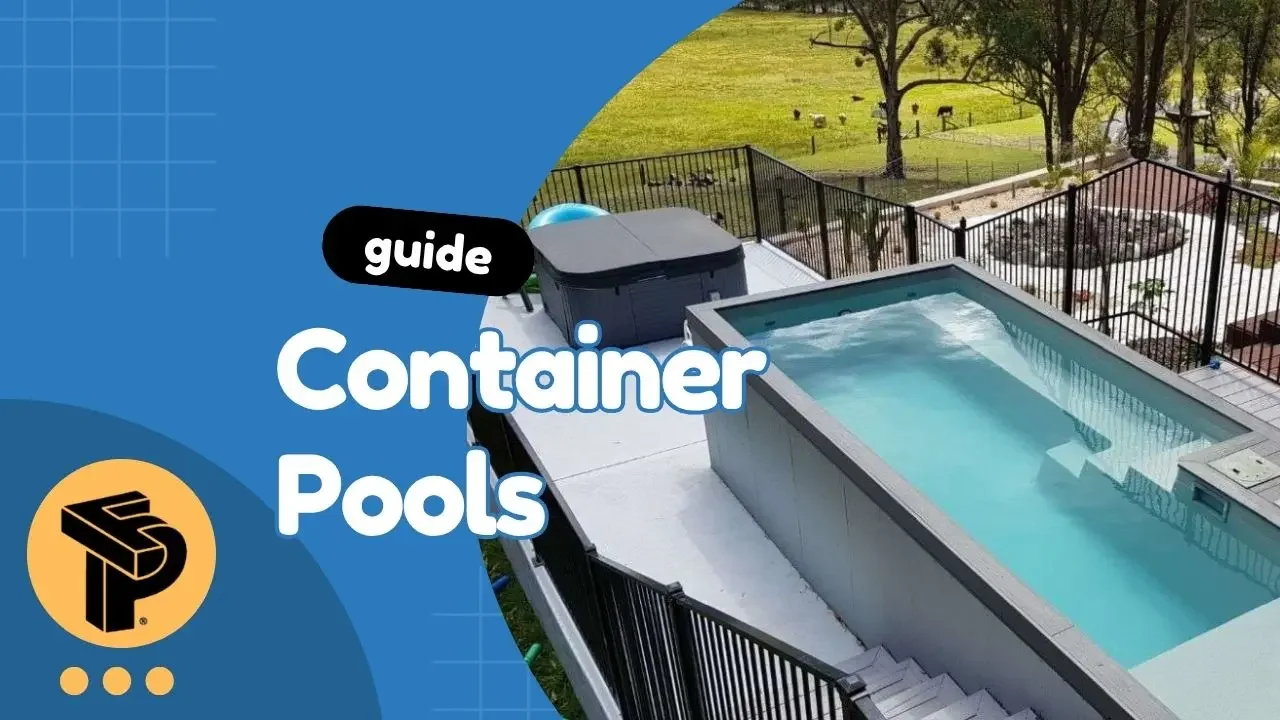
The traditional in-ground pool has a problem that container pools solve neatly: it takes months to build, costs a small fortune, and once it's in the ground it's in the ground. A container pool is manufactured off-site, delivered in days, and installed in a fraction of the time, at a price that makes the whole project feel less like a major construction commitment and more like a considered backyard upgrade.
That efficiency is the primary appeal. But container pools aren't a simple purchase, and the range in quality between a well-built unit and a poorly-built one is significant. Here's what you need to know.
What Is a Container Pool?
A container pool is a swimming pool built from a modified shipping container, typically a 20-foot or 40-foot ISO-standard steel container, with the interior waterproofed and fitted with filtration, pumping, and heating systems. The container provides the structural shell; everything else is added during the conversion process.
The appeal compared to conventional in-ground pools:
Speed. A traditional concrete pool takes 6–12 weeks minimum to excavate, form, pour, cure, and finish. A container pool is manufactured off-site and installed in days once the excavation is ready.
Cost. Factory production keeps manufacturing costs lower than on-site concrete construction. The structural shell is already engineered; you're paying for conversion, not for building a structure from scratch.
Portability. Unlike a concrete pool, a container pool can theoretically be relocated. This is rarely done — excavation, delivery, and reinstallation costs make relocation expensive, but the option exists, which matters for renters or buyers who aren't certain about their long-term plans.
Design flexibility. Container pools can be installed in-ground, partially in-ground, or fully above-ground. The exterior steel surface can be left as-is, clad with timber or composite decking, or integrated into a broader landscape design. The rectangular form is clean and lends itself to modern outdoor aesthetics.
Container Pool Sizes
Standard container dimensions translate directly into pool dimensions:
20-foot container pool: approximately 20' x 8' x 4.5'–5' water depth. Usable water space of roughly 160 square feet, comfortably large for swimming laps, family use, and relaxation. This is the most popular size for residential backyard installations.
40-foot container pool: approximately 40' x 8' x 4.5'–5'. Double the length, same width — better for lap swimming but requires significantly more yard space and more excavation. Popular for larger properties and commercial applications like resorts and hospitality venues.
Modified configurations: Some manufacturers offer widened pools (two containers side-by-side) or shorter custom lengths. These are non-standard and typically cost more.
The 8-foot width is the main constraint of container pool design. It's enough for comfortable use by most families but narrower than the 12–16 feet of a typical residential in-ground pool. For buyers who want to swim laps rather than recreate, the 40-foot length compensates; for buyers who want a wide, spacious pool for socializing, a container pool may not fully satisfy.
What's Included in a Container Pool
This varies significantly by manufacturer — and understanding what's included versus what's extra is critical to accurate cost comparison.
A fully specified container pool should include:
Structural shell — the modified shipping container, cleaned and prepared for pool use.
Waterproof liner — the interior coating that holds water. Options include spray-applied polyurea coatings (durable, seamless, but requires careful application), vinyl liner (lower cost, replaceable but seamed), and fiberglass gel coat (premium option, glass-smooth interior surface). The liner specification is one of the most important quality indicators — ask specifically what's used and what the warranty covers.
Filtration system — pump, filter, and associated plumbing. Pool-grade equipment that circulates and cleans the water. For container pools, variable-speed pump systems are more energy-efficient and worth specifying over single-speed pumps.
Heating — electric heat pump or gas heater. Heat pump systems are more energy-efficient for pools used regularly; gas heaters warm faster but cost more to operate. Solar heating is an option for pools in sunny climates.
Steps and entry — integrated stainless steel or composite steps at one end, or an external entry ladder. Steps lose some usable pool length but are more comfortable and safer for regular use.
Electrical — wiring for pump, heater, and lighting. Needs to be connected to your panel by a licensed electrician on-site.
What's typically not included: excavation, decking, fencing (required by most jurisdictions for pools), landscaping, and final electrical connection. These are site costs that vary by location and specification.
Container Pool Costs: The Full Picture
Unit price:
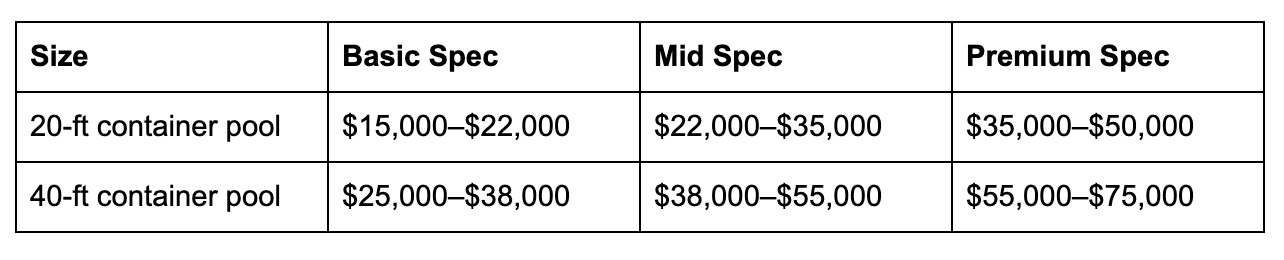
What moves you up the pricing tiers: liner quality (vinyl → polyurea → fiberglass), equipment grade (single-speed → variable-speed → smart systems), heating system (electric resistance → heat pump → solar-assisted), and included features (steps, lighting, automation).
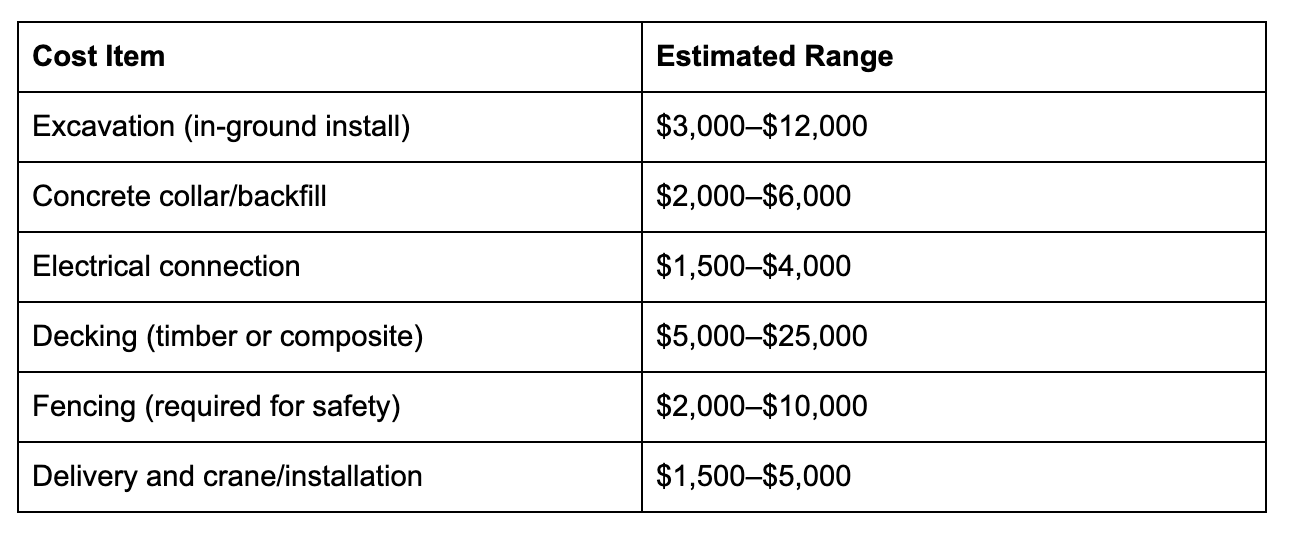
Site costs (add to unit price):
Realistic all-in range:
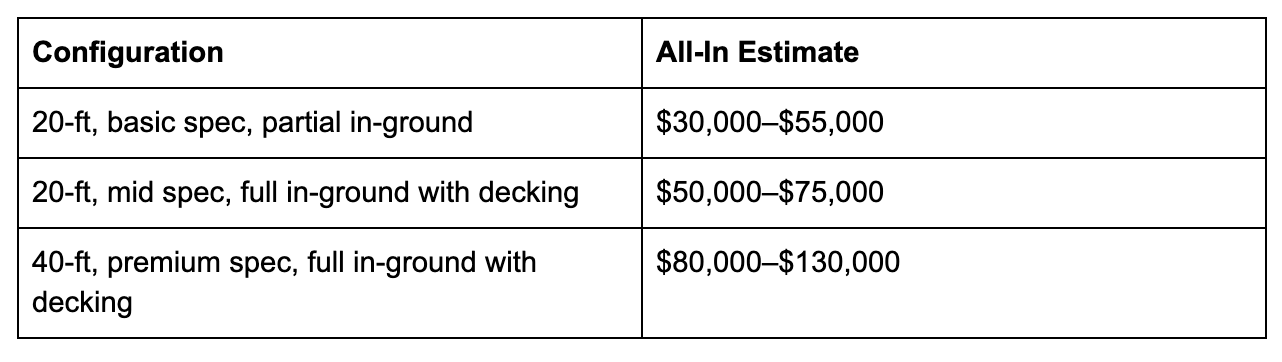
For comparison: a traditional gunite in-ground pool of similar size in the US currently costs $55,000–$120,000 for the pool structure alone, before decking, fencing, and landscaping.
In-Ground vs. Above-Ground: How to Choose
In-ground installation produces the cleanest visual result, the pool sits flush with the surrounding landscape, the deck meets the pool edge, and the steel exterior is invisible. It requires excavation, a concrete collar around the container to support the surrounding soil, and backfill. Installation takes one to three days once excavation is complete.
Above-ground installation eliminates excavation cost and complexity. The container sits on a prepared flat surface, typically a concrete pad or compacted gravel base. The steel exterior is visible and typically clad with timber decking or composite panels to improve aesthetics. Entry requires steps on the exterior. Installation is faster and cheaper than in-ground, and the pool can theoretically be relocated.
Partial in-ground is a hybrid often seen on sloped properties, the pool is set into the slope, in-ground on the uphill side and above-ground on the downhill side. This can create a dramatic visual effect and is often the most practical option on sites with grade changes.
What to Look for When Comparing Container Pools
Liner specification and warranty. The liner is what keeps water in and is the most failure-prone component over time. Ask specifically what material is used, what the application thickness is, and what the manufacturer warrants against delamination, cracking, or leakage. Avoid vague descriptions like "high-quality waterproofing."
Container grade. One-trip containers in good structural condition are significantly better starting material than older used containers. Ask what grade of container the pool is built from and whether there's a structural inspection process.
Equipment brands. Pool filtration and heating equipment has well-established quality tiers. Hayward, Pentair, and Jandy are reputable equipment brands for filtration and heating; ask what equipment is spec'd rather than accepting generic descriptions.
Certification and compliance. Pool installations are regulated in every US state. The pool unit itself may need to meet specific standards for electrical safety, bonding, and in some jurisdictions GFCI protection. Confirm the manufacturer's units comply with the relevant standards for your state.
Delivery and installation support. Who delivers? Who installs? What's included in the delivery price versus what you arrange locally? Understand the full logistics before committing.
Container Pools for Commercial and Hospitality Use
Container pools have found a strong market in the hospitality and short-term rental sectors, for the same reasons they work well residentially — fast installation, reasonable cost, and a visual distinctiveness that photographs exceptionally well.
A container pool at a glamping property, boutique resort, or vacation rental generates significant booking appeal. The "container pool" aesthetic — industrial-meets-resort, clean lines, deck-integrated design — is exactly what short-term rental guests pay a premium for. The ROI math works: a property with a private pool commands meaningfully higher nightly rates in virtually every short-term rental market.
For hospitality buyers operating multiple units or developing a new property, the fast installation timeline of container pools versus traditional in-ground pools can bring a property to revenue months earlier — which has real financial value beyond just the cost comparison.
The Bottom Line
Container pools occupy a legitimate position in the pool market, not a compromise on the way to a "real" pool, but a genuinely well-suited product for buyers who want a quality swimming pool faster and for less money than traditional in-ground construction allows.
The range in quality is real. The best container pools use proper marine-grade waterproofing, quality equipment, and rigorous structural preparation. The worst use inadequate liners that fail early and cheap equipment that requires replacement within a few years. Price alone doesn't tell you which category a given product falls into, asking the right questions does.
Explore Prefahb's container structures and models for residential and hospitality applications.