
Home Decor: How to Build a Space That Actually Feels Like Yours
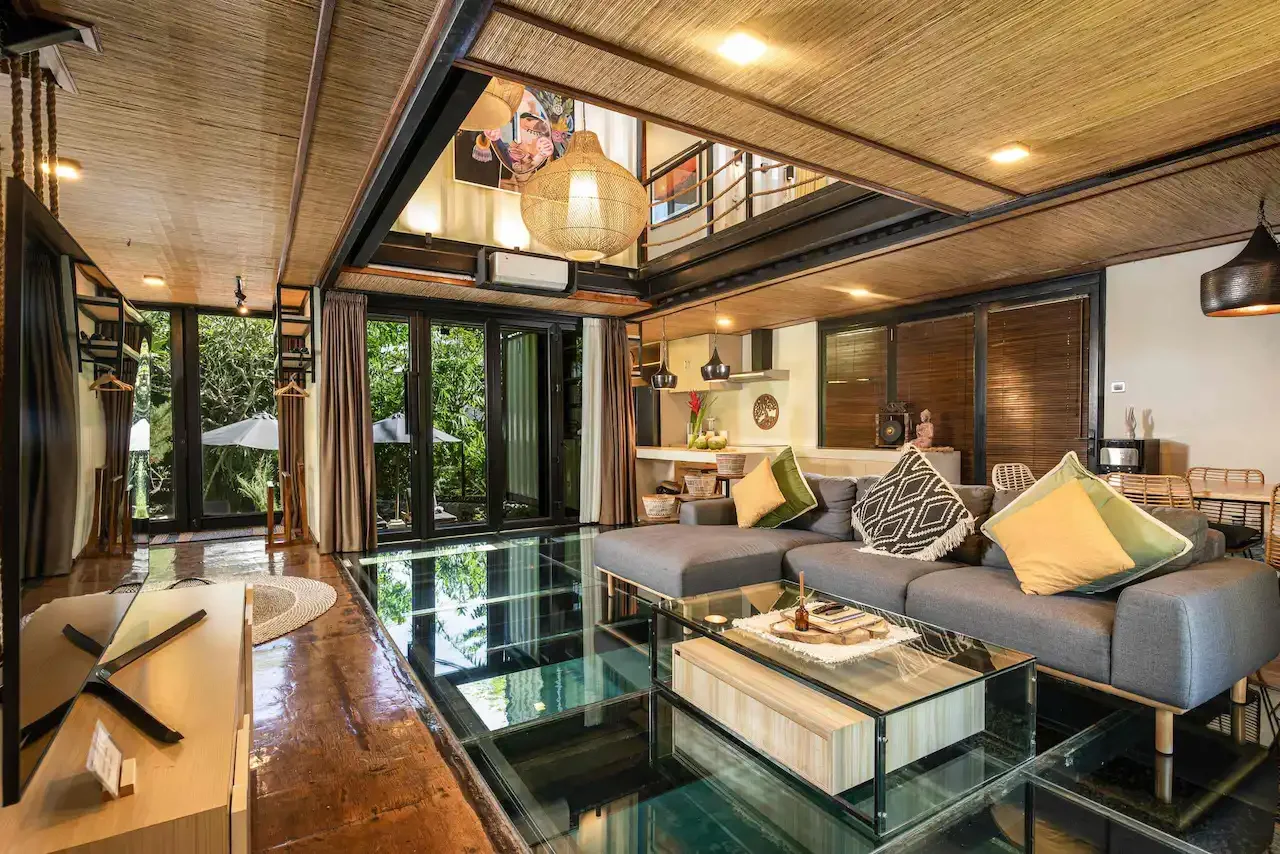
Most home decor advice starts in the wrong place. It starts with trends — what's in this year, which colors are having a moment, what the algorithm is serving up. And it produces homes that look current for about eighteen months and then feel dated, because they were built around what was fashionable rather than around anything durable.
The homes that feel genuinely good to be in, the ones that age well and feel like a coherent expression of the people who live there, are built on different principles. Coherence over trend-chasing. Character over novelty. Materials that improve with age over materials that photograph well when new.
This is a guide to thinking about home decor that way: how to develop a style that's actually yours, how to choose materials and objects with lasting character, and how to build spaces that feel intentional rather than assembled from a catalog.
Start With What You Respond To, Not With a Named Style
The instinct to pick a style — "I want my home to be modern farmhouse" or "I'm doing Scandinavian" — is understandable but often counterproductive. Named styles are useful as reference points, but adopting one wholesale tends to produce homes that feel like showrooms rather than homes: coherent, yes, but impersonal.
A better starting point is attention to what you actually respond to. Over a few weeks, notice the spaces, images, and objects you're consistently drawn to. Save them — a folder, a board, a collection. Then look for the common threads:
Are you drawn to warm tones or cool ones?
Do you respond to minimal, uncluttered spaces or to layered, collected ones?
Are you attracted to natural materials with visible grain and texture, or to smooth, uniform surfaces?
Do you like ornamentation and detail, or clean and unadorned?
Are you drawn to light, airy spaces or to darker, cozier ones?
The patterns that emerge are more useful than any named style, because they're yours. A home built around the qualities you genuinely respond to will feel right in a way that a correctly-executed version of someone else's style never will.
The Principle of Coherence
If there's one principle that separates homes that feel considered from homes that feel chaotic, it's coherence — the sense that the elements of a space belong together and express a consistent sensibility.
Coherence doesn't mean everything matches. A room where every piece is from the same collection feels sterile. Coherence means the elements share an underlying logic — a consistent palette, a compatible level of formality, a common material sensibility — even when individual pieces are quite different.
Practical ways to build coherence:
A disciplined color palette. Most well-designed homes work from a restrained palette: a few neutrals as the foundation, one or two accent tones, and natural material colors (wood, stone, plant green) as connective tissue. The discipline of limiting the palette is what allows varied objects to feel like they belong together.
A consistent material sensibility. A home that mixes high-gloss synthetic surfaces with rough natural materials and ornate traditional pieces feels incoherent. A home that consistently favors natural, matte, tactile materials — even across very different objects — feels unified.
Compatible levels of formality. A formal antique dining set and a casual bean-bag lounge in adjacent spaces create tension. Keeping the level of formality broadly consistent across connected spaces maintains coherence.
Repetition and rhythm. Repeating a material, a color, or a form across a space creates visual rhythm that ties it together. A wood tone that appears in the floor, a shelf, and a chair frame; a black metal that recurs in light fixtures, window frames, and hardware.
The Case for Natural Materials
If there's a single decor decision with the most impact on how a home feels, it's the choice to build around natural materials.
Natural materials — wood, stone, rattan, bamboo, linen, wool, leather, clay — share qualities that synthetic materials struggle to replicate. They have depth and variation (no two pieces of wood are identical). They engage the senses (the texture of linen, the coolness of stone, the warmth of wood). And crucially, they age well — developing patina, character, and a lived-in quality that makes a home feel established rather than newly assembled.
This is the fundamental difference between natural and synthetic materials over time. A synthetic surface looks best the day it's installed and slowly degrades. A natural material often looks best years later, having developed the character that only time and use produce. Leather that's softened and darkened, wood that's developed a warm patina, stone worn smooth at the edges — these are the marks of a home that's been genuinely lived in, and they're impossible to fake.
For homes built around natural materials, the decor decisions become simpler and more durable. Instead of chasing trends, you're accumulating pieces with genuine character that will look better, not worse, as the years pass.
Style Directions Worth Understanding
While building around your own responses is better than adopting a style wholesale, understanding the major contemporary directions provides useful reference points:
Warm minimalism. Minimal in the sense of uncluttered and restrained, but warm rather than stark. Natural materials, earth tones, plenty of texture, and careful editing. This has become the dominant direction in thoughtful contemporary interiors precisely because it combines the calm of minimalism with the comfort of natural warmth. It avoids both the coldness of hard minimalism and the visual noise of maximalism.
Japandi. A hybrid of Japanese and Scandinavian sensibilities — both cultures value craft, simplicity, natural materials, and functional beauty. Japandi interiors are calm, uncluttered, and warm, emphasizing handmade quality, natural wood, and a restrained palette. One of the more enduring recent directions because it's built on principles (craft, simplicity, nature) rather than surface aesthetics.
Organic modern. Contemporary forms and clean lines combined with natural, organic materials and shapes. The architecture and furniture are modern; the materials and textures are natural and tactile. Balances the precision of modern design with the warmth of natural materials.
Tropical and Balinese. Drawing on the craft traditions and aesthetic of tropical regions — teak, rattan, bamboo, stone, natural textiles, and a strong indoor-outdoor connection. Balinese-influenced decor in particular emphasizes handcrafted quality, carved detail, and a tranquil, nature-connected atmosphere. Sophisticated but never cold, refined but organic.
Mid-century modern. Continuously relevant since the 1950s. Clean lines, organic forms, functional design, natural materials (particularly teak and walnut), and furniture raised on tapered legs. Its endurance comes from getting fundamental things right about proportion, function, and material honesty.
The Balinese Influence: Craft Meets Calm
Balinese and tropical-influenced home decor deserves particular attention because it addresses something many contemporary homes lack: warmth and craft in an increasingly mass-produced world.
The Balinese aesthetic is built on genuine craft traditions. Furniture and decorative objects are frequently handmade by skilled artisans — carved teak, hand-woven rattan, hammered metalwork, natural stone. This handcrafted quality gives Balinese-influenced interiors a depth and character that mass-produced furniture rarely achieves. Each piece carries the subtle irregularities and marks of the human hand that made it.
The material palette is warm and natural: teak and other tropical hardwoods, rattan and bamboo, natural stone, and organic textiles in linen and cotton. Colors are earthy and grounded — warm browns, natural whites, terracotta, deep greens — reflecting the natural environment.
Perhaps most importantly, the Balinese aesthetic emphasizes a connection between interior and exterior, between built space and nature. Open layouts, large openings, indoor plants, natural light, and a general porousness between inside and outside create the tranquil, nature-connected atmosphere that defines the style. It's an approach to living, not just decorating.
For those drawn to this direction, the key is authenticity of materials and craft. Genuine Balinese-influenced decor uses real natural materials and, where possible, genuinely handcrafted pieces — the character comes from the authenticity of the materials and the craft, not from styling that imitates the look with synthetic substitutes.
Prefahb's roots in Ubud, Bali connect directly to this tradition — the same craft ecosystem that produces the region's renowned furniture and decorative arts informs the material sensibility and attention to natural quality across Prefahb's work.
Building a Home Over Time
Perhaps the most important shift in thinking about home decor is patience. The most compelling homes aren't assembled in a single shopping trip or a single weekend. They're built over time, accumulating pieces with genuine meaning and character — objects found while traveling, furniture inherited or discovered secondhand, handmade pieces collected deliberately, and quality items acquired as budget allows.
This slower approach produces homes that feel genuinely personal because they are — each object has a story, a reason for being there, a connection to the life of the person who chose it. It's the opposite of the catalog-assembled room where everything arrived on the same delivery truck.
The practical version of this: resist the urge to complete a room all at once. Buy the pieces you love when you find them, live with intentional gaps, and let the space evolve. A room with three genuinely loved objects and some breathing space is more compelling than a room filled with adequate-but-uninspiring pieces bought to fill it quickly.
A few principles for building over time:
Invest in the pieces you use most and see most — the sofa, the bed, the dining table. Quality here pays off daily.
Choose natural materials that will age well, so time improves your home rather than degrading it.
Let some objects be found rather than bought — the character of a home comes partly from pieces with history and meaning.
Edit as much as you acquire. A home improves as much from removing what doesn't belong as from adding what does.
The goal isn't a finished, magazine-ready room. It's a home that feels like an authentic, evolving expression of the people who live in it — coherent, characterful, built around natural materials that grow more beautiful with time, and genuinely comfortable to live in.
Discover Prefahb's Bali-crafted home collections and natural material furnishings.