
Home Accessories: How to Style a Space With Real Character
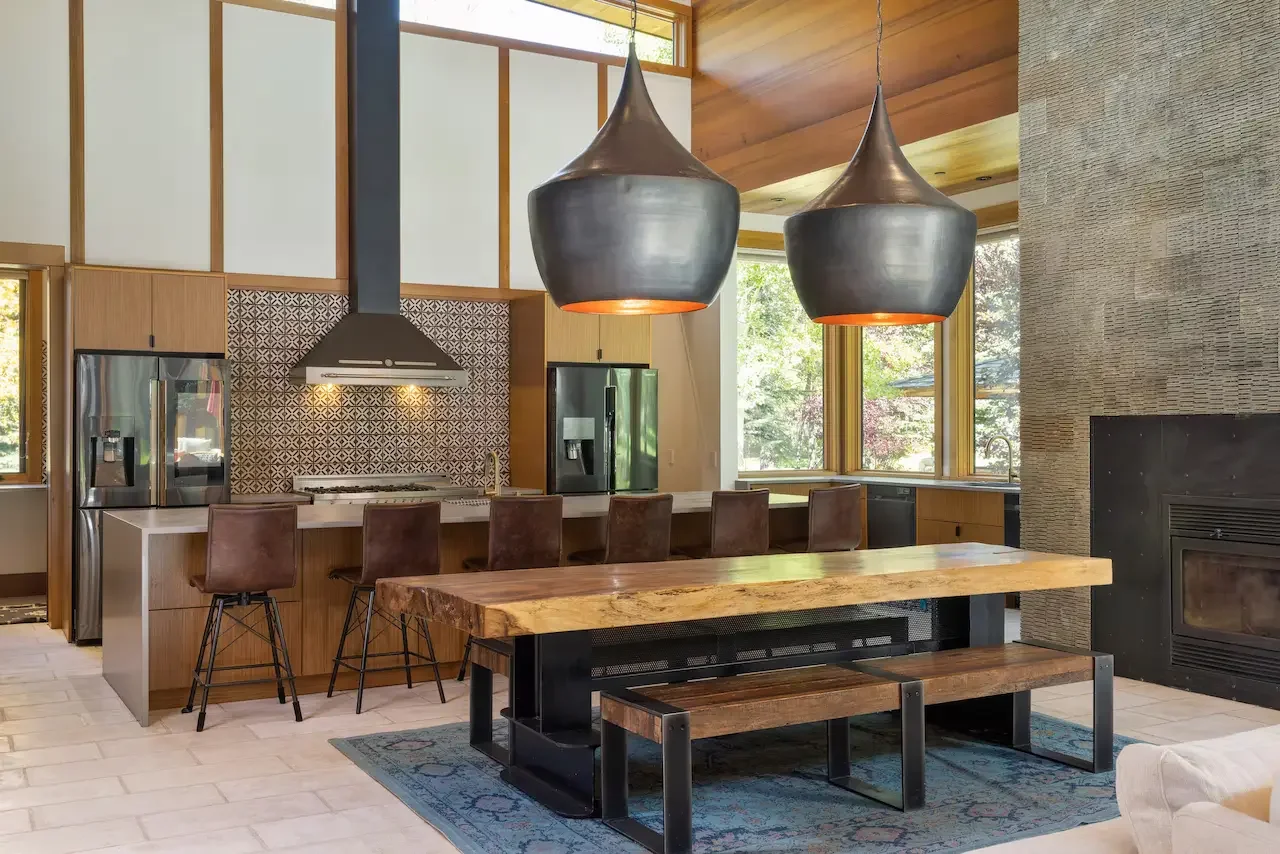
Furniture makes a room functional. Accessories make it feel like a home. It's the difference between a space that looks like a furniture showroom — everything correct, nothing personal — and one that feels genuinely lived in, considered, and expressive of the people who live there.
But home accessories are also where good intentions most often produce clutter. The instinct to add "just one more" decorative object, to fill every surface, to keep buying small things because they're small and cheap — this is how rooms drift from characterful to chaotic. The skill of accessorizing is as much about restraint and editing as it is about acquisition.
Here's how to think about home accessories: what actually adds character, how to style pieces so they read as intentional rather than cluttered, and where to invest versus economize.
What Home Accessories Actually Do
Accessories are the layer of a home that sits above furniture and architecture — the objects that add personality, warmth, texture, and meaning. They fall into a few categories:
Textiles. Cushions, throws, rugs, curtains. Textiles add softness, color, texture, and warmth. They're among the most impactful accessories because they engage touch as well as sight and can transform the feel of a space seasonally without major expense.
Decorative objects. Vases, bowls, sculptures, ceramics, books, objets. These are the pieces that add personality and visual interest to surfaces — shelves, tables, mantels. Quality decorative objects with genuine character are the accessories that most distinguish a personal home from a generic one.
Lighting. Lamps, candles, and the warm light they cast. Lighting is perhaps the most underrated accessory category — the quality and warmth of light shapes the entire mood of a space, particularly in the evening. Good lighting accessories transform a room after dark.
Natural elements. Plants, flowers, branches, natural objects. Living and natural elements bring life, color, and a connection to the outdoors that no manufactured object replicates.
Wall pieces. Art, mirrors, hangings. These define the vertical planes of a room and are often where personal taste and meaning are most directly expressed.
Functional-decorative pieces. Trays, baskets, boxes, storage that's beautiful as well as useful. These accessories earn their place twice — providing function while adding character.
The Principle of Meaningful Restraint
The single most important principle in accessorizing is restraint — and it's the one most people struggle with most.
The impulse to fill space is strong. An empty shelf feels incomplete; a bare surface feels unfinished. So we fill them — and in filling them, we often lose the visual calm and intentionality that made the space feel good in the first place.
The homes that feel most considered are almost always the ones that have edited most ruthlessly. A few genuinely good pieces, given room to breathe, create more impact and more character than many small pieces crowded together. Negative space — the empty area around and between objects — is what allows the objects that remain to be seen and appreciated.
This requires a shift in thinking: from "what can I add to fill this space?" to "what genuinely deserves to be here?" Every accessory should earn its place. If an object doesn't add real character, meaning, or beauty, removing it improves the space more than keeping it.
A practical exercise: remove all the accessories from a surface or shelf, then add back only the pieces you genuinely love, one at a time, stopping well before the surface feels full. The result is almost always better than the crowded original.
How to Style Accessories Well
Beyond restraint, a few consistent principles produce well-styled arrangements:
Group in odd numbers. Groupings of three and five read as intentional and dynamic; even-numbered groupings can feel static and formal. A trio of objects of varying heights is the workhorse arrangement of good styling.
Vary height, scale, and texture. A good grouping has variation — a tall element, a medium one, a low one; a smooth surface against a rough one; a solid form beside an open one. This variation creates visual interest. A row of similar-height, similar-texture objects reads as monotonous.
Create visual triangles. Arrange groupings so the eye moves in a triangle rather than a straight line — the tallest element at one point, with the others creating a balanced but dynamic composition. This applies to shelf styling, tabletop arrangements, and gallery walls.
Layer front to back. Depth makes an arrangement feel rich. Place larger pieces behind, smaller in front, with some overlap. Flat, single-plane arrangements feel less considered than layered ones.
Repeat materials and tones. Coherence in an accessorized space comes from repeating elements — a wood tone that appears in several objects, a metal finish that recurs, a color that threads through a room. Repetition ties disparate objects into a coherent whole.
Leave breathing room. Space around and between groupings is essential. A shelf styled with intentional gaps looks more considered than one packed edge to edge, however beautiful the individual objects.
Why Natural and Handcrafted Accessories Add the Most Character
If there's one guiding principle for choosing accessories that add lasting character, it's to favor natural materials and handcrafted pieces over mass-produced synthetic ones.
The reason is the same as with furniture and larger decor decisions: natural and handmade objects have qualities that manufactured objects lack. Variation and irregularity that signal the human hand. Materials that engage the senses and age with grace. A depth and character that comes from genuine craft rather than industrial production.
A hand-thrown ceramic bowl, with its subtle asymmetries and the maker's marks visible in the glaze, has a presence that a perfectly uniform factory-produced bowl doesn't. A hand-woven basket, a carved wooden object, a piece of hand-loomed textile — these carry the evidence of the person who made them, and that evidence is what gives them warmth and character.
Natural materials also age well, which matters for accessories you'll live with for years. A wooden object develops patina. A natural-fiber textile softens and mellows. A stone piece wears smooth. Where a mass-produced synthetic accessory looks best the day it's bought and then slowly degrades, a natural handcrafted piece often becomes more beautiful with time and use.
This is where craft traditions like those of Bali offer something genuinely valuable. The Balinese craft ecosystem produces decorative objects — carved wood, woven rattan and bamboo, hand-worked metal and stone, natural textiles — with a level of skill and material authenticity that's increasingly rare in a mass-produced world. Accessories from genuine craft traditions bring exactly the depth, warmth, and character that transform a house into a home. Prefahb's connection to the Ubud, Bali craft community reflects this same commitment to natural materials and genuine craftsmanship.
Where to Invest and Where to Economize
Not all accessories deserve the same investment. A sensible approach:
Invest in:
Textiles you touch daily. A genuinely good wool throw, well-made linen cushions — you interact with these constantly, and quality is felt as much as seen.
Lighting. Quality lamps and the warm light they cast shape the mood of your home every evening. Worth investing in.
A few anchor pieces. One or two statement decorative objects with real character and presence — a substantial ceramic vessel, a striking piece of art, a beautiful handcrafted bowl — anchor a room and are worth spending on.
Handcrafted, natural-material pieces. These add lasting character and age well, justifying the investment.
Economize on:
Trend-driven items. The decorative object that's having a moment will feel dated in eighteen months. Spend little on trends.
Filler pieces. If you find yourself buying something just to fill space, that's a signal not to buy it at all — but if you must, keep it inexpensive.
Frequently-changed seasonal items. Accessories you rotate seasonally don't need to be expensive.
The overall principle: invest in the pieces that add lasting character and that you interact with daily; economize on anything trend-driven or temporary.
Building an Accessorized Home Over Time
The best-accessorized homes aren't styled in a single shopping trip — they're accumulated over time, which is precisely what gives them character.
The accessories that make a home feel genuinely personal are usually the ones with stories: the bowl found at a market while traveling, the textile brought back from a trip, the ceramic made by a friend, the piece inherited from family, the artwork acquired because it genuinely moved you. These meaningful objects — accumulated deliberately over years — create a home that expresses an actual life, not a decorating scheme.
This argues for patience and selectivity. Rather than filling a home with accessories quickly, collect meaningful pieces gradually. Live with some empty surfaces and intentional gaps. Buy the object you genuinely love when you encounter it, rather than settling for adequate pieces to fill space now. The home that results feels authentic and characterful in a way that a quickly-assembled one never does.
The goal isn't a perfectly styled, magazine-ready room. It's a home layered with objects that have genuine character and meaning — natural materials, handcrafted pieces, and personal finds, arranged with enough restraint that each one can be seen and appreciated. That's what turns a well-furnished house into a home that feels like yours.
Explore Prefahb's Bali-crafted home accessories and natural material collections.