
The outdoor dining table is one of those purchases where the decision looks simple. It's just a table, until you've lived with the wrong choice for a season. A table that seemed fine in a showroom starts to wobble, rust, split, or fade after one winter outside. The replacement cost, combined with the waste, makes the original "deal" feel considerably less attractive.
The core problem is that outdoor furniture buyers often apply indoor thinking to outdoor conditions. An indoor table lives in a stable, controlled environment. An outdoor table deals with UV exposure, temperature cycling, moisture, wind, and sometimes salt air, conditions that destroy inadequate materials and separate quality construction from cosmetic quality.
Here's how to think about the decision so you buy something that lasts.
Material Performance: The Most Important Decision
Material selection determines everything else, how the table performs in your climate, how much maintenance it requires, how long it lasts, and what it costs to replace. Choose the wrong material for your conditions and no other quality factor compensates.
Teak
Teak is the benchmark hardwood for outdoor furniture, and for good reason. Its natural oil content makes it inherently resistant to moisture, rot, and most pests without treatment. Properly maintained teak furniture lasts decades; 20–30 years is realistic for quality pieces used in outdoor environments.
Teak weathers from its warm honey color to a silver-gray patina if left untreated, which many owners prefer. To maintain the original color, periodic teak oil treatment (typically once or twice a year) is required. Neither the treated nor the weathered version compromises the wood's structural integrity.
The limitations: teak is expensive, particularly Grade A teak (from the heartwood of mature trees, which has the highest oil content). It's also heavy, a quality teak dining table is not easy to move. And the sustainable sourcing question is real: FSC-certified teak from responsibly managed plantations should be specified wherever possible.
Best for: buyers who want the highest-quality wood outdoor table and can invest in quality upfront. Teak works in virtually any outdoor climate.
Powder-coated aluminum
The most maintenance-free outdoor table option. Aluminum doesn't rust, doesn't rot, and doesn't require periodic treatment. Powder coating, a factory-applied electrostatically bonded finish, is more durable than paint and doesn't chip the same way. Quality powder coat finishes last 10–20 years before requiring attention.
Aluminum is lightweight (an advantage for moving and rearranging), available in virtually any color, and produces very clean, contemporary profiles. The weakness is that aluminum can feel less substantial than heavy wood or steel; cheaper aluminum tables flex and rattle; quality ones don't.
Aluminum table quality varies significantly with wall thickness. Thin-wall aluminum extrusions produce lighter, less stable tables; heavier sections produce tables that feel and perform closer to steel. Ask about material, gauge or weight.
Best for: coastal environments (no corrosion risk), low-maintenance buyers, contemporary outdoor aesthetics, situations where moving the table frequently matters.
Cast iron and wrought iron
Traditional materials for outdoor furniture with excellent weather resistance when properly maintained. Heavy and extremely stable — cast iron outdoor tables are essentially unmovable, which is an advantage in wind-prone locations. Visually ornate compared to aluminum or teak; more appropriate for traditional garden aesthetics.
The maintenance requirement: bare iron rusts. Quality cast and wrought iron outdoor furniture has protective coatings (powder coat, enamel, or galvanizing beneath the finish coat) that need to be maintained — chips and scratches should be touched up annually. Once rust develops and spreads, it's difficult to reverse without stripping and refinishing.
Best for: traditional or cottage garden aesthetics, windy locations where stability matters, buyers willing to maintain the surface.
Powder-coated steel
Similar performance profile to cast iron but lighter and available in more contemporary profiles. Steel tubes, channels, and bars allow for cleaner, more geometric designs than cast iron. Powder coat finish requires the same maintenance attention, chips must be addressed to prevent rust.
In a contemporary context, particularly paired with container homes or modern prefab architecture, powder-coated steel outdoor tables (typically in matte black, charcoal, or similar industrial finishes) are the most aesthetically consistent choice. The material language matches the building.
Best for: contemporary and industrial aesthetics, buyers with covered or semi-covered outdoor spaces who can maintain the finish.
Teak with aluminum frame
A hybrid approach that combines teak tabletop surface (warm, natural, durable) with an aluminum frame (corrosion-free, lighter than steel or cast iron). The combination gives the visual warmth of wood with the structural advantage of aluminum, and eliminates the leg-joinery failure that wood-frame tables can develop in wet climates. Increasingly common in quality outdoor dining sets.
Natural stone (granite, slate, concrete)
Durable, visually distinctive, and completely weather-resistant. Stone tabletops are heavy — typically 80–200+ lbs for a dining table — which eliminates the wind-uplift risk that plagues lighter materials but makes repositioning essentially impossible. Stone doesn't fade, rust, or rot.
The technical limitation: most natural stone is porous and benefits from periodic sealing. And in climates with hard freeze-thaw cycles, stone (particularly slate and concrete) can crack as water in micro-pores freezes and expands. Granite is the most freeze-resistant of the common stone options.
Best for: permanent outdoor installations where the table won't be moved, warmer climates without severe freeze-thaw cycles, buyers who want a visually distinctive anchor piece for an outdoor dining area.
Rattan (synthetic for outdoors)
Natural rattan is not appropriate for full outdoor exposure, moisture and UV degrade the cane relatively quickly. Synthetic rattan (resin wicker) looks similar and handles outdoor conditions well, particularly in covered or semi-covered outdoor spaces. Quality synthetic rattan outdoor tables are typically paired with glass or aluminum table tops for a practical surface.
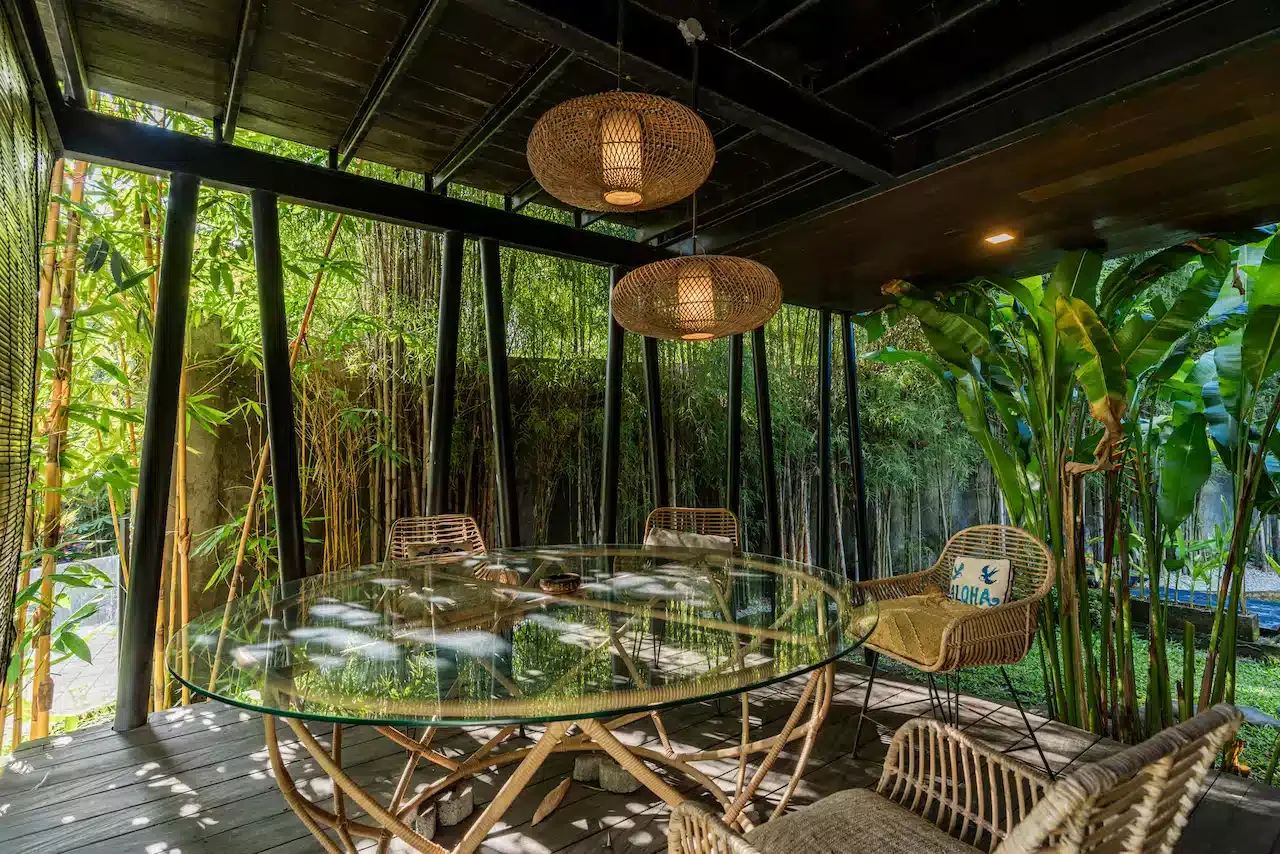
For the covered terrace or pergola, a partially protected outdoor space that's not fully weather-exposed. Synthetic rattan dining sets produce a visually warm, resort-style aesthetic that solid wood or metal alternatives don't match. In Bali-influenced outdoor design, rattan is the natural material choice for exactly this application.
What to avoid for outdoor use: Untreated softwood (pine, spruce) without protective coating — rots within two to three seasons. Particle board or MDF with outdoor-grade laminate — delaminates when moisture penetrates edges. Standard indoor-grade tempered glass as a tabletop — doesn't fail more than indoor glass from weather, but the frame it sits in usually does.
Size: How to Calculate What You Need
The calculation is simpler than most buyers make it:
Per-person allowance: 24 inches of table width per person is comfortable; 22 inches is the minimum; 26+ inches is generous for family-style dining where dishes are shared.
Rectangular table sizing:
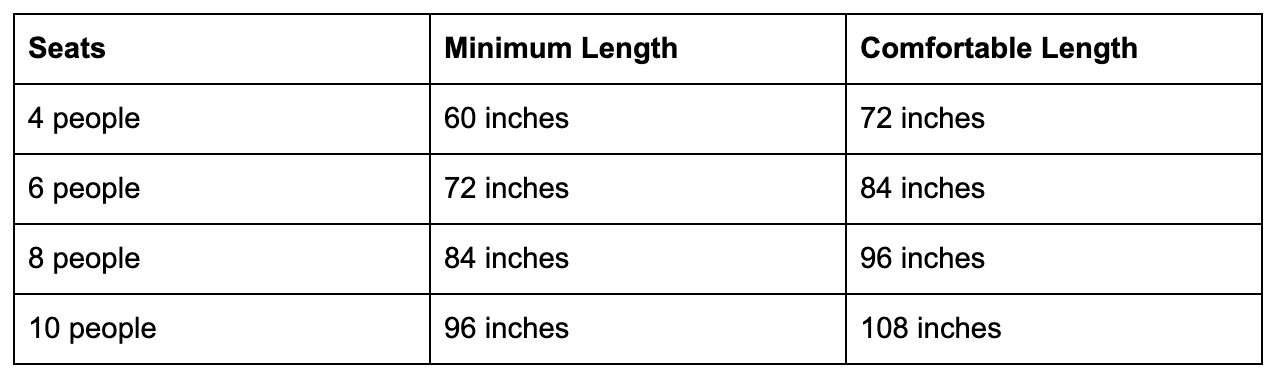
Standard outdoor dining table width is 36–40 inches — enough for two place settings and serving dishes in the center.
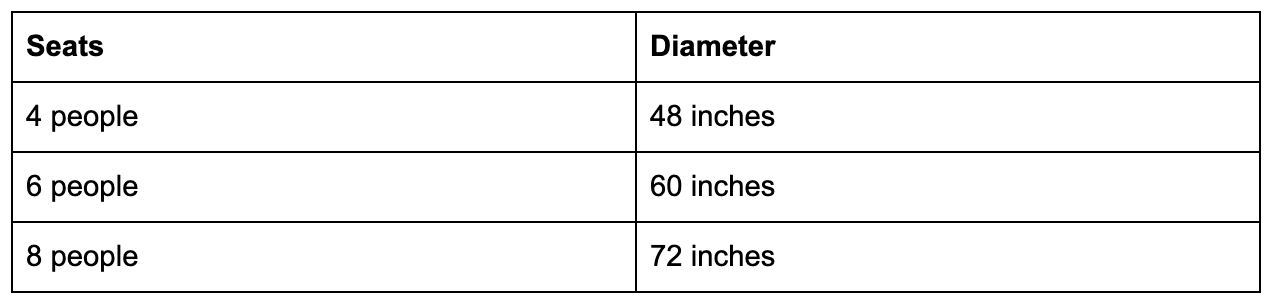
Round table sizing:
Space around the table: Allow 36 inches of clearance on all sides — enough for chairs to push back and someone to walk behind. For a 84x40-inch rectangular table, the overall space needed is approximately 156x112 inches (13x9.3 feet) — larger than most buyers assume when looking at a table in isolation.
Shape: Round vs. Rectangular vs. Oval
Round tables promote equal conversation — everyone faces everyone else, no seat feels distant or "at the end." They're ideal for groups of 4–6 where social connection is the priority. The limitation: they don't scale as well as rectangular tables — a round table that seats 8 comfortably requires a 72-inch diameter that dominates most outdoor spaces.
Rectangular tables scale more efficiently for larger groups and fit naturally into rectangular patio or deck spaces. The end seats are slightly less socially connected than center seats, which matters more in some contexts than others. For family outdoor dining — where the primary use is a fixed group eating together regularly — a rectangular table is usually the practical choice.
Oval tables are underutilized but often ideal: the elongated shape fits more people than a round table of similar width while maintaining the social quality of a round table (no corners, no "head of the table"). For buyers who want the warmth of a round table but need seating for 6–8, an oval is worth considering seriously.
The Umbrella Question
Outdoor tables with umbrella holes are practical for sun-exposed positions and less practical for covered terraces where the umbrella is redundant and the hole is just a maintenance issue.
If you want an umbrella: ensure the hole diameter (typically 1.5–2 inches) matches your umbrella pole size, and that the table base accommodates or has room for a weighted umbrella stand. Cantilever umbrellas (offset pole) eliminate the need for a table hole and allow more flexible positioning — worth the price premium if table aesthetics are a priority.
If you have a covered terrace: skip the umbrella hole. A clean tabletop without a grommet looks better and has one less maintenance point.
Outdoor Dining Sets vs. Mixing Pieces
Buying a matched dining set (table plus chairs from the same manufacturer in the same material) is efficient and guarantees visual consistency. The limitation is that sets are designed to look good together in a photograph and may not be individually optimal.
A mixed approach — quality table from one source, quality chairs from another — requires more effort but often produces better results. A teak table can pair with aluminum chairs; a powder-coated steel table can pair with synthetic rattan chairs; a stone table can pair with virtually any material. The through-line is material quality and scale consistency, not identical sourcing.
For Bali-influenced outdoor spaces — which is Prefahb's aesthetic territory — mixing teak or reclaimed wood with rattan seating is one of the more successful outdoor dining combinations: warm, natural, and visually rich without being heavy.
Explore Prefahb's outdoor furniture and home accessories from Bali.