
Natural Swimming Pools: The Biology Behind Them and What They Actually Cost
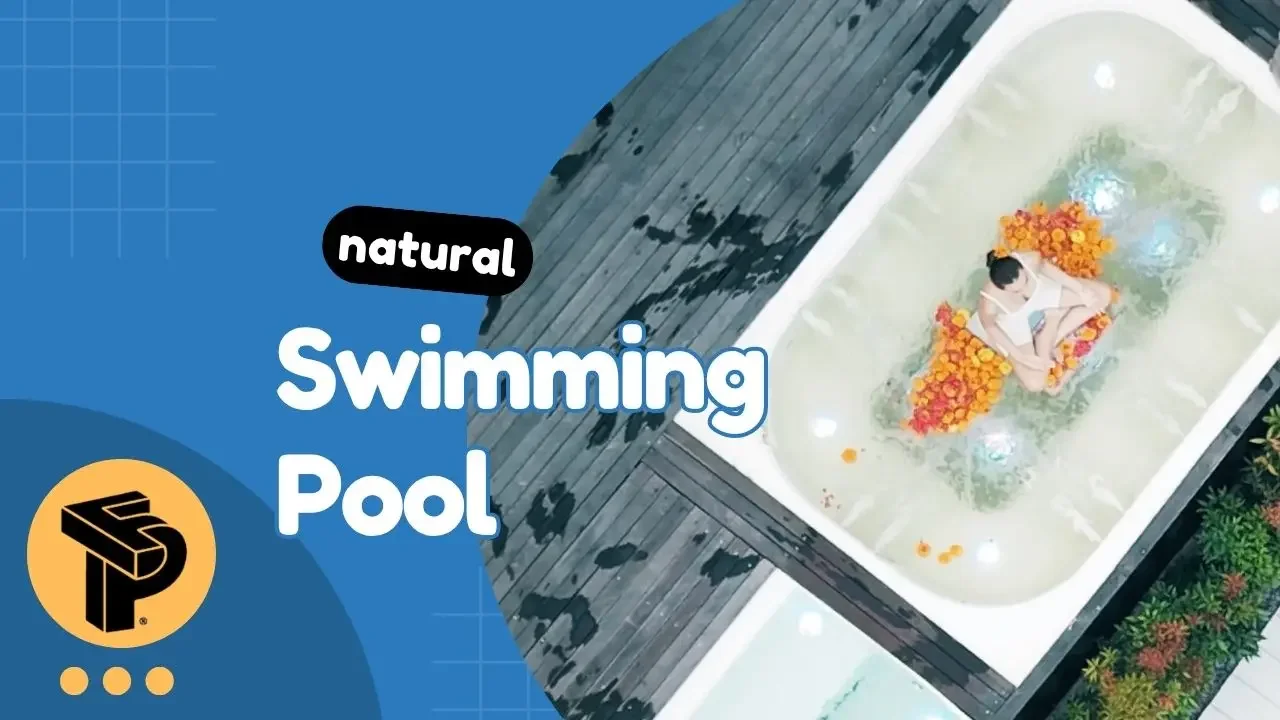
The idea is simple and old, swimming in clean water without chemicals. Ponds, lakes, rivers. Humans have been doing it for all of recorded history and considerably longer. What's relatively new is the engineering approach to recreating that experience in a residential backyard: a designed ecosystem that keeps water clear and safe not through chlorination but through biology.
Natural swimming pools (NSPs), also called swimming ponds or bio-pools have been widespread in Europe since the 1980s, particularly in Austria, Germany, and Switzerland, where the concept was developed and refined. They've arrived in the US more slowly, but interest has grown significantly in the last decade as awareness of chlorine's environmental effects and the sheer visual appeal of a naturalistic water feature have reached more homeowners.
Here's the actual science behind how they work, what different designs look like, and what you should expect to spend.
The Biology: How Natural Pools Stay Clean
Understanding the biology makes evaluating natural pool designs much easier, because everything else; zone sizing, plant selection, circulation rate, flows from these principles.
A natural pool is a balanced aquatic ecosystem. The water clarity and safety depend on maintaining the right relationship between nutrients (introduced by swimmers, rainfall, and plant decomposition), plant uptake, and microbial activity.
The core mechanism: Aquatic plants — particularly submerged plants with extensive root systems, absorb nutrients like nitrogen and phosphorus that would otherwise feed algae growth. The plant root zone also supports dense communities of beneficial bacteria that break down organic matter and outcompete pathogens for resources. This combination, nutrient uptake by plants and pathogen suppression by beneficial microorganisms, is what replaces the chemical functions of chlorine.
Why this works: The same ecosystem dynamics operate in healthy natural bodies of water. A clear mountain lake isn't clear because someone is adding chemicals; it's clear because the biological system is in balance. Natural pool design essentially engineers that balance in a controlled environment.
What can go wrong: The system breaks down when nutrients overwhelm plant uptake capacity, typically from overloading (too many swimmers, too much organic matter), insufficient regeneration zone size, or the wrong plant selection. Green algae blooms are the most common symptom. Unlike chlorine-based pools where you adjust chemistry, the remedy in a natural pool is biological: adding more plants, adjusting circulation, or temporarily reducing load.
The Two Zones
Every natural pool design, regardless of aesthetic, is based on two functional zones:
The swimming zone — where people actually swim. Depths typically range from 4 to 8 feet depending on use. This zone is kept free of plants to maintain clear water and unobstructed swimming. It's lined (usually with a flexible EPDM or reinforced PVC liner, or sometimes clay) to prevent seepage and provide a clean base.
The regeneration zone — planted with aquatic vegetation and connected to the swimming zone via water circulation. This is where the biological filtration happens. The regeneration zone typically occupies 30–50% of the total water surface area — sometimes more in design approaches that prioritize water quality over swimming area.
Water moves from the swimming zone into the regeneration zone (typically via a pump and distribution system), passes through the planted area, and returns to the swimming zone purified. The circulation rate needs to be sufficient to turn over the full water volume regularly — most designs target a complete turnover every 24–48 hours.
Design Approaches
Natural pools span a wide aesthetic range, from designs that look almost indistinguishable from a conventional pool (clean lines, deck surround, submerged plant zone concealed at the edges) to designs that read as landscape features as much as swimming pools (organic shapes, visible plantings, stone edges, wildlife habitat).
Formal natural pool. The swimming zone is a defined rectangle or geometric shape with clean edges. The regeneration zone is a separate but visually integrated planted area, often appearing as a shallow shelf along one or two sides, separated from the swimming zone by a low wall or grille just below the water surface. From a distance, this looks similar to a conventional pool with particularly attractive plantings.
Best for: properties with formal garden design, buyers who want a naturalistic water quality system but a conventionally pool-like visual result.
Swimming pond. A more naturalistic approach where the swimming and regeneration zones are integrated into a single organic-shaped water body. The planted areas are visible and celebrated rather than concealed. Stone edges, varied depths, and wildlife-friendly zones around the perimeter create a landscape feature that happens to be swimmable.
Best for: larger properties where the pool is meant to be a landscape centerpiece, buyers who want to encourage wildlife and native plantings as part of the property's character.
Hybrid / bio-pool. The most engineered approach, a conventional pool-like structure with a purpose-designed biological filtration system. The swimming zone is indistinguishable from a conventional pool; the filtration happens in a separate tank or zone connected by a piping system rather than in an integrated open planted area. This approach allows a smaller total footprint because the regeneration zone is containerized, and makes the swimming experience most similar to a conventional pool.
Best for: smaller urban lots where space for a full open regeneration zone isn't available, buyers transitioning from conventional pool thinking who want the chemical-free benefits of a natural system without dramatically changing the pool experience.
Plant Selection: What Goes in the Regeneration Zone
The plants are the engine of the system. Selection matters enormously, the wrong plants underperform, require replacement, or in some cases (invasive species) create long-term problems.
Submerged plants do the most biological work because their root systems are in direct contact with the water being filtered. Good choices for US climates include: Elodea (waterweed), Myriophyllum (milfoil, native species only, not the invasive Eurasian milfoil), and various native pondweeds. These plants absorb nutrients directly through their leaves and roots while oxygenating the water.
Emergent plants grow with roots submerged and stems above water. They're important for nutrient uptake at the shallow edges of the regeneration zone and provide habitat structure for beneficial organisms. Good options include: native cattails (Typha spp.), bulrushes (Scirpus), sedges, and native irises. Avoid introducing non-native species that could escape to local waterways.
Floating plants shade the water surface, which reduces algae-promoting sunlight penetration while providing another nutrient uptake pathway. Water lilies are the most common choice — they're effective, beautiful, and available in varieties suited to most US climates.
The key principle: choose native species appropriate for your specific climate zone wherever possible. They're better adapted, less likely to be invasive, and more supportive of local wildlife.
Natural Pool Costs
Natural pools cost more upfront than conventional pools of similar swimming area, for two reasons: the total footprint is larger (the regeneration zone adds 30–50% to the area), and the design and construction require specialized expertise that isn't as widely available as conventional pool contractors.
Initial construction cost:
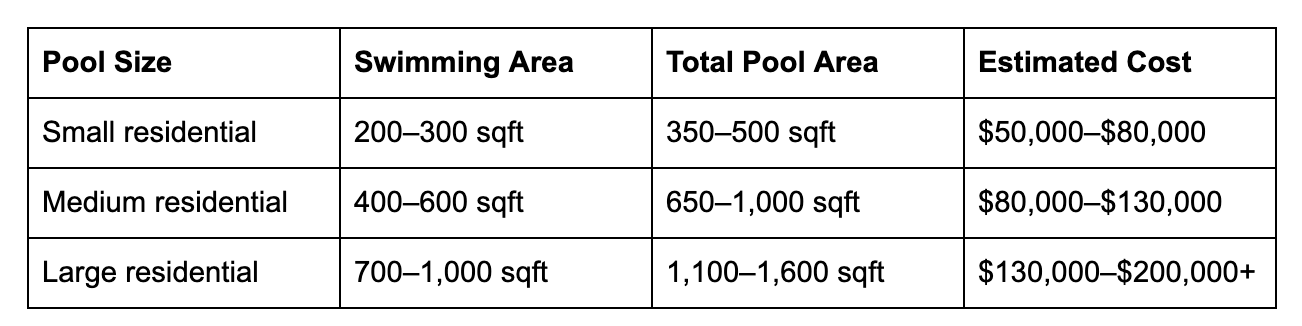
These are US residential estimates; costs vary significantly by region, site conditions, and the specific design approach.
Operating cost comparison:
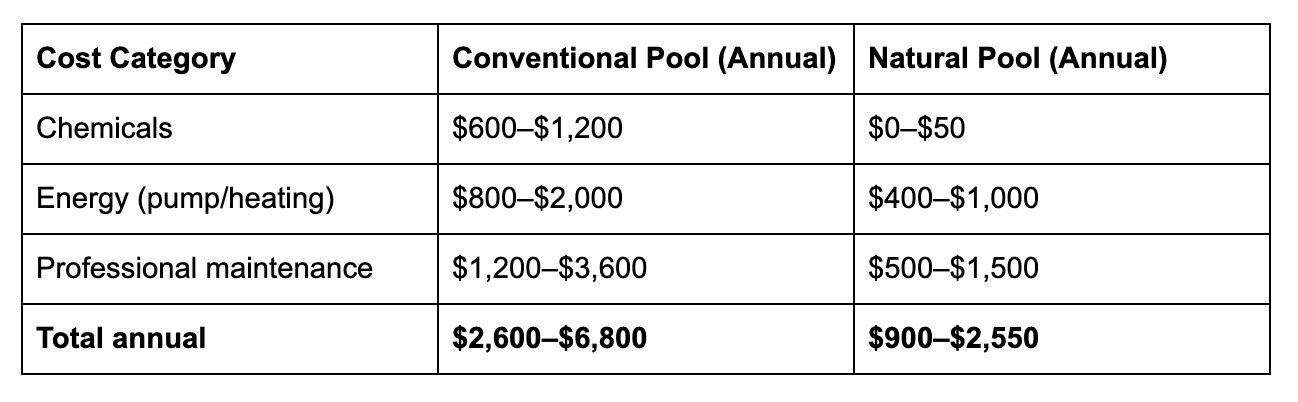
The operating cost reduction is genuine and significant. Over a 20-year ownership period, the savings typically amount to $30,000–$80,000 compared to a chemically maintained pool, which partially or fully offsets the higher initial construction cost.
What Ownership Is Like
Natural pool ownership is different from conventional pool ownership in ways that surprise some buyers.
The water looks different. A well-functioning natural pool has a slight green tint from beneficial phytoplankton — not algae bloom, but a gentle, healthy tinge. The water at the bottom may not be as visibly clear as a bleached white-tiled chlorine pool. Many owners find this more beautiful; some find it disconcerting until they understand what it means.
The maintenance calendar is biological, not chemical. Spring brings the system back into balance after winter dormancy; summer is peak performance season; fall involves cutting back dying plant matter before it decomposes in the water. The tasks are different from adding chemical bags and backwashing a filter, but are not necessarily more difficult once you understand what you're doing.
Wildlife arrives. Frogs, dragonflies, water beetles, and other aquatic organisms colonize a natural pool within months of filling. This is a sign of ecosystem health, not contamination — but buyers who want a purely human-controlled environment should know this is coming.
Chemical inputs are minimal but not always zero. Some natural pool owners use small amounts of specific approved inputs during startup or when the system is under stress — typically natural clay flocculants or specific bacterial inoculants to help establish the ecosystem. Full chemical independence is the steady-state goal, not always the starting point.
Is a Natural Pool Right for Your Property?
The honest answer is that natural pools suit specific buyers and properties better than others.
Natural pools work best for: Properties with adequate space for the full swimming-plus-regeneration footprint, buyers who value environmental credentials and naturalistic aesthetics, people comfortable with a swimming environment that looks and feels more like a lake than a conventional pool, and properties in climates with defined seasons (the biology works best when it has a winter rest period).
Natural pools are less suited for: Very small urban lots where the regeneration zone would consume most of the outdoor space, buyers who specifically want the highly controlled, visually uniform look of a conventional chlorinated pool, and climates with extremely long, hot summers where algae pressure is high and the biological system is under constant stress.
For buyers on the fence, the best move is to visit an existing natural pool installation — ideally in your climate zone — before committing. The experience of swimming in one either convinces you immediately or clarifies that a conventional pool is what you actually want.
Discover Prefahb's eco-conscious approach to sustainable outdoor living structures.