
Mid Century Modern Prefab Homes: Why This 1950s Aesthetic Never Really Left
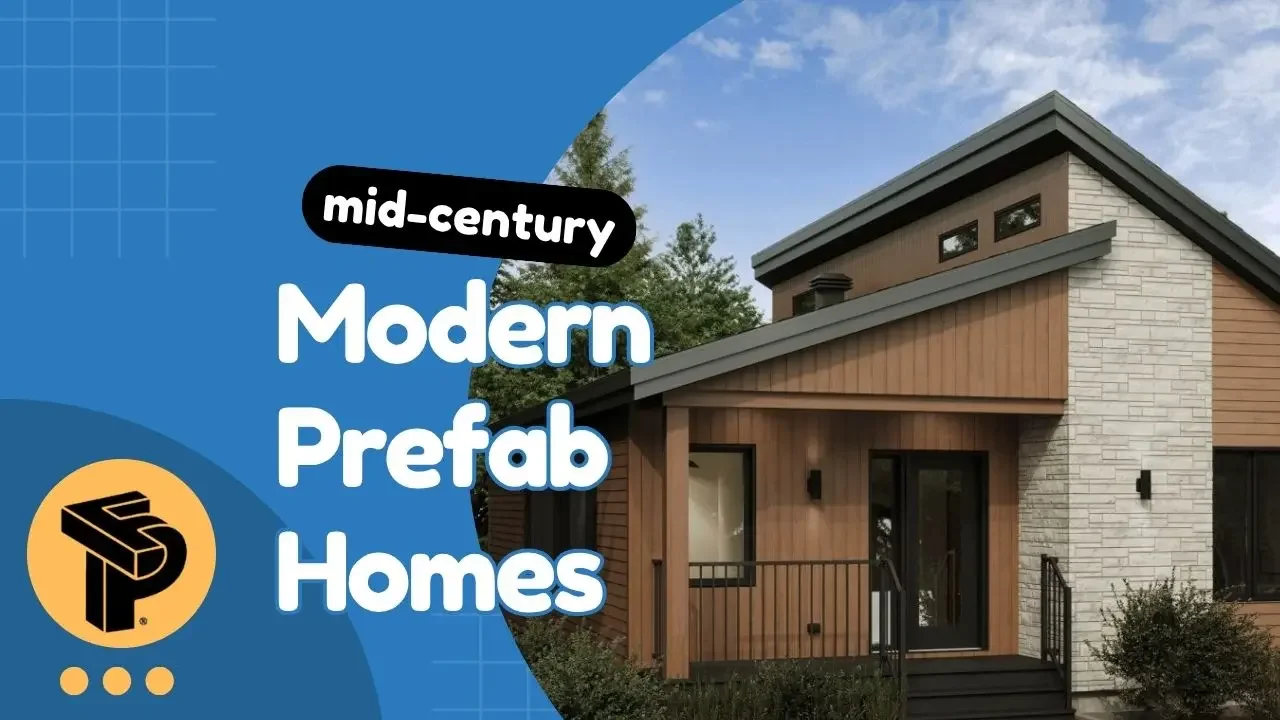
Walk through any home design platform today, and you'll find it everywhere — the clean horizontal lines, the flat or low-pitched roofs, the floor-to-ceiling glass that dissolves the boundary between inside and out. Mid century modern is having a moment. Except it never really stopped having one.
What's new is where the style is showing up: in prefab homes. And it turns out the marriage makes more sense than it might seem at first glance.
The Original Vision Was Always About Prefab
Here's the part most people don't know. Mid century modern design — the movement that flourished between roughly 1945 and 1969 — was never just about aesthetics. It was about democratizing good design. The architects and designers of that era believed that well-designed homes shouldn't be a luxury for the wealthy. They were actively trying to find ways to build beautiful, livable spaces at a cost that ordinary Americans could afford.
Charles and Ray Eames spent years on their "Case Study House" — an exercise in building an architecturally serious home from prefabricated, off-the-shelf industrial components. Joseph Eichler built thousands of mid-century modern homes across California using systematic, repeatable construction methods that were, by the standards of the time, a form of prefabrication.
The idea that prefab is somehow at odds with mid-century design is historically backwards. Prefab was the point.
What Defines the Mid Century Modern Look
Before getting into how it applies to prefab homes today, it's worth being precise about what mid century modern actually means visually — because the term gets applied loosely.
Flat or low-pitched shed roofs. Not the steep gables of traditional American housing. The roofline is calm, horizontal, and integrated with the overall geometry of the building.
Post-and-beam structure. Walls aren't load-bearing, which frees up the facade for large expanses of glass. The structure is visible and celebrated rather than hidden inside drywall.
Indoor-outdoor flow. Sliding glass doors, covered patios, interior courtyards — the mid century modern home treats the boundary between inside and outside as permeable by design.
Natural materials alongside industrial ones. Wood, stone, and concrete appear together without apology. The palette is warm but not fussy — teak, walnut, exposed aggregate, raw steel.
Functional ornamentation. Decoration exists, but it's earned. A clerestory window is beautiful because it's also doing the work of bringing in light without sacrificing wall space. A breeze block screen creates privacy while casting geometric shadows. Everything pulls its weight.
Why Container Prefab and Mid Century Modern Work Together
Shipping container architecture has more in common with mid century modern principles than almost any other contemporary building type.
The container's rectangular geometry — long, low, horizontal — echoes the profile of a classic Eichler or Case Study House. The exposed steel structure is an honest expression of how the thing is built, which aligns with mid century modern's commitment to structural legibility. The flat roofline is inherent to the form.
Where it gets interesting is in how container-based homes extend the indoor-outdoor philosophy. A 40-foot container opened up along its long south face — with a full-height sliding glass wall and a covered wood deck extending the interior outward — reads unmistakably mid century. The language translates.
Prefahb's Model B201 (from $29,000) is a good entry point for this aesthetic. A 20'–40' container with a wood deck, horizontal profile, and optional garden roof hits several mid century notes without trying too hard. Add the Green Package's circular staircase and you have the kind of architectural detail — functional, geometric, visually interesting — that mid century designers would have recognized immediately.
At the higher end of the lineup, the Model A2030 ($91,200) and Model P202 ($109,995) open up into the multi-element configurations where mid century modern really comes alive — long horizontal volumes, generous glazing, strong connection to the landscape.
Getting the Interior Right
The structure is only half the equation. Mid century modern interiors have a specific material and furniture vocabulary that's worth understanding if you're trying to achieve the look authentically.
Wood is everywhere, but it's specific. Teak, walnut, and oak — flat-grained, warm-toned, and finished with oil rather than glossy lacquer. Plywood, used honestly and well-detailed, is completely in period.
The color palette is restrained. Warm whites, warm grays, terracotta, olive, mustard — used as accents against a mostly neutral base. Not the cool grays of contemporary minimalism, and not the country-house warmth of farmhouse style. Something in between.
Furniture has legs. One of the most recognizable features of mid century modern interiors is that furniture is elevated off the floor — chairs, sofas, credenzas, and beds all sit on tapered legs rather than sitting directly on the ground. It creates visual lightness in a room.
The kitchen is open. Mid century modern homes pioneered the open-plan kitchen-living area decades before it became standard. In a container home's efficient floor plan, this isn't just an aesthetic choice, it's the natural configuration.
Mid Century Modern Prefab in Practice: What to Expect
If you're building a mid century modern prefab home today, there are a few practical things to keep in mind.
Site orientation matters more than usual. Mid century modern design relies on solar orientation — south-facing glass for winter gain, roof overhangs calculated to shade summer sun. Work with your manufacturer to orient the unit for your specific latitude and climate. A Prefahb unit installed in Montana has different solar geometry than one installed in Southern California, and the roof overhang depth should reflect that.
Landscaping completes the look. The mid century modern aesthetic extends to the landscape — low-water plants, decomposed granite, concrete pavers, drought-tolerant specimens like agave and ornamental grasses. The relationship between the building and the ground plane is part of the design, not an afterthought.
The "less" principle applies strictly. Mid century modern interiors become cluttered fast if you're not disciplined. Built-in storage is your friend — and most prefab manufacturers, including Prefahb, offer interior customization that can integrate the built-in millwork that keeps the aesthetic coherent.
The Enduring Appeal
Mid century modern has outlasted every design trend that was supposed to replace it. Postmodern came and went. McMansion peaked and collapsed. Farmhouse is already fading. Mid century modern keeps coming back because it was right about something fundamental: that good design — honest materials, strong geometry, generous light, connection to the outdoors — makes daily life better regardless of decade.
Prefab, at its best, is built on the same premise. Factory production isn't a shortcut to a worse building. It's a more disciplined, more repeatable path to a better one.
Together, they make a convincing argument.
Explore Prefahb's model lineup to find the right foundation for your mid century modern build.