
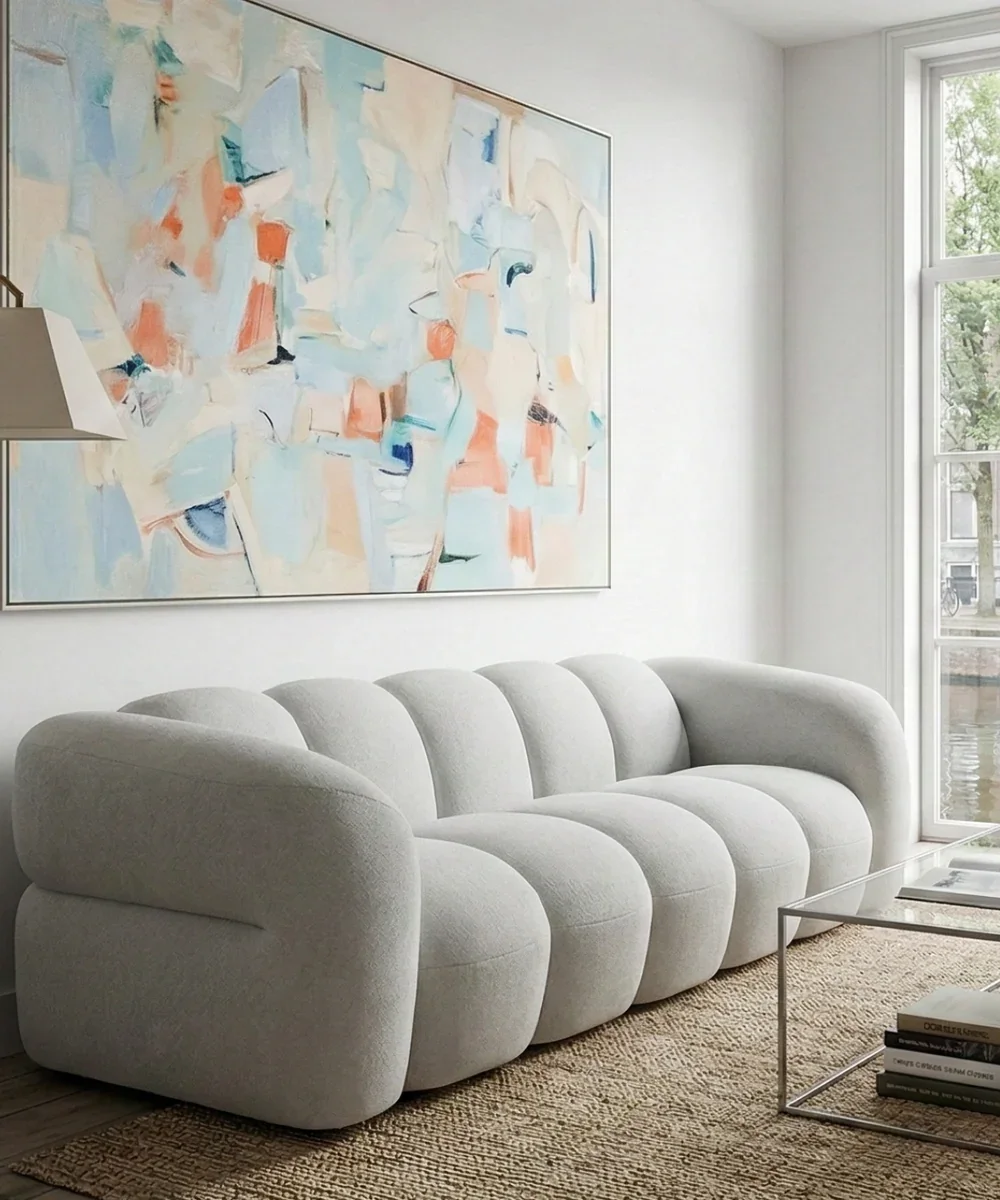
Let's get one thing out of the way: a minimalist sofa is not a sofa with the good parts removed. The cheap version of the look, a flat grey box on skinny legs, is what gives the style a bad name. The real thing is harder to make, because when there is nothing to hide behind, every proportion and every seam has to be right.
This guide is opinionated on purpose. If you want a neutral overview of sofa styles, there is a modern sofa buying guide for that. Here is how to pick a minimalist sofa you will still like in ten years.
The Test: Squint at It
Stand ten feet back from any sofa you are considering and squint. A good minimalist sofa still reads as a clear, balanced shape: arm height relates to back height, the seat sits at a believable height off the floor, and nothing looks accidentally thick or thin. A bad one collapses into a grey blob, or looks like three separate boxes somebody stacked.
That squint test works because minimalism is mostly about proportion. Four numbers carry most of it:
| Measurement | Comfortable Range | What Goes Wrong |
|---|---|---|
| Seat height | 16"–18" | Too low looks slouchy; too high feels like a bench |
| Seat depth | 21"–24" | Under 21" feels perched; over 25" demands pillows |
| Arm height | 24"–26" or slim/no arm | Bulky arms kill the clean silhouette |
| Leg height | 5"–8" visible | No legs makes the sofa look heavy and grounded |
Where Minimalist Sofas Get Cheap
Without tufting, piping or carved details, a cheap sofa has fewer places to look cheap, which is exactly why shoppers get fooled. The shortcuts hide in places you cannot see in a product photo:
Frame: Kiln-dried hardwood (oak, beech, ash) outlasts engineered board and softwood. Ask directly, because a listing that says "solid frame" often doesn't mean solid wood.
Cushion core: High-resiliency foam wrapped in feather or fiber holds its shape. Thin, low-density foam is how makers keep lines slim at your expense.
Joinery: Corner blocks, dowels or screws at the joints beat staples and glue.
Seams: Straight, even stitching with no puckering at corners.
If a minimalist sofa costs a third of its competitors and looks the same in the photo, the savings are almost always inside the frame and cushion.
Fabric: Texture Does the Decorating
With no ornament, the upholstery has to carry the personality. Warm neutrals (oatmeal, stone, sand, soft charcoal) are the safest choices, but a single flat color in a flat weave looks lifeless. Texture solves that:
Linen and linen blends: relaxed and breathable, wrinkle a little, which is part of the charm.
Bouclé: soft and tactile, but snags with pets and sheds some loops over time.
Tight wool or wool blend: durable, naturally stain-resistant, excellent for daily use.
Performance fabrics: the practical pick for households with kids or pets.
Skip leather alternatives that crack at the seams within a couple of years; if you like the leather look, buy actual leather or a quality performance weave.
Straight Lines, Soft Edges
The most common mistake is buying the sharpest, boxiest sofa because it looks the most minimalist online. In real rooms, a slightly softened corner (a small radius on the arm or back) is easier on the eye and on shins. Warm minimalism, which pairs clean shapes with natural materials, tends to age better than the cold, white-box version.
Pairing a Minimalist Sofa With the Rest of the Room
A simple sofa leaves room for the things around it to matter. Natural materials do a lot of work against clean lines: a wooden coffee table with visible grain, a woven rug, a rattan accent chair or a handcrafted side table. This is where Prefahb's Bali craft background is directly useful. Our teak and rattan pieces, made in our Ubud workshops, are built to sit beside a restrained sofa and give the room warmth without clutter.
Minimalist Sofas in Small and Container Spaces
Minimalism earns its keep in compact homes. Raised legs let the floor run visibly underneath, which makes a room read larger. Slim arms save a few inches of width on each side. A single sofa, correctly sized, beats a sectional that swallows the room.
In a container home, measure carefully: a standard container's interior is roughly 92 inches wide, so a long sofa that runs the full width leaves no walkway. In our Model B201, a 72"–80" minimalist loveseat-style sofa along the long wall usually works best, with the murphy bed leaving the floor clear in the daytime.
What to Budget
| Tier | Price | What You Get |
|---|---|---|
| Entry | $700–$1,500 | Engineered frame, standard foam, limited fabric choice |
| Mid-range | $1,800–$3,500 | Hardwood frame, high-resiliency cushions, quality upholstery |
| Premium | $4,000+ | Solid-wood joinery, handcrafted details, long warranties |
Quick Checklist Before You Buy
Do the squint test on photos and in person if possible.
Check seat depth is 21"–24", unless you want a deep lounge feel.
Ask what the frame is made of, and whether the joints are screwed or stapled.
Choose texture over flat color if the palette is neutral.
Measure doorways, hallways and the room before ordering.
Minimalism rewards patience: wait for the sofa that is simple because it is resolved, not because it is cheap. See how clean lines and handcrafted materials come together in Prefahb homes on the Prefahb Models & Shop page.